

GreyThe Silent Ones
The Grey is the most widely reported extraterrestrial form in modern ufology: a small, slender being with an oversized head and large, dark, almond-shaped eyes. It became the dominant image of the 'alien' after the Betty and Barney Hill case in 1961 and is now embedded in global popular culture.
At a glance
- Home system
- Zeta Reticuli
- Avg. height
- 2′11″ – 4′11″
- Appearance
- Grey skin, large black eyes, slender limbs
- Reported lifespan
- Unknown
- Social structure
- Reported as hive-like or role-based
- Technology
- Reported as highly advanced, clinical
- Primary traits
- Reported as detached, methodical, silent
- Relationship to Earth
- Central to abduction narratives since the 1960s
Physical profile
The Grey is described with more consistency than any other type, partly because the image has been reinforced by decades of book covers, films and television. Witnesses report a being between three and five feet tall with a large, smooth, hairless head that is wide at the cranium and narrow at the chin. The eyes dominate the face: enormous, black, almond-shaped, wrapping slightly around the sides of the head, with no visible pupil, iris or white. The nose is two small openings, the mouth a thin slit that is rarely seen to move, and ears are absent or vestigial.
Skin is described as grey, sometimes greyish-white or greyish-brown, and smooth or slightly rubbery to the touch. The body is thin, with a narrow torso, long arms and three or four fingers. Movement is described as fluid and coordinated, and many witnesses say that groups of Greys acted with a single purpose, as though directed by one mind. Clothing is either absent or a tight one-piece suit the same colour as the skin. Some accounts distinguish a taller, more authoritative Grey from the smaller workers.
Researchers who have compared hundreds of accounts note a few variants worth recording. The 'small Grey' of three to four feet is the most common and is described doing the physical work of an encounter. A 'tall Grey' of five to six feet, sometimes described with a longer face and a more pronounced brow, appears less often and usually in a directing role. A minority of witnesses describe Greys with a slight bluish, tan or whitish tint, or with a visible seam-like line down the face, and a small number describe them as wearing hooded garments. None of these variations changes the essential template.
Reported origin
The association with Zeta Reticuli, a binary pair of Sun-like stars about 39 light-years away in the southern constellation Reticulum, comes from a single source. Under hypnosis in 1964, Betty Hill drew a star map she said she had been shown aboard the craft. In 1968 an Ohio schoolteacher, Marjorie Fish, built three-dimensional models of nearby stars and proposed that the map matched a view from Zeta Reticuli. Astronomy magazine published the interpretation in 1974, and it entered the lore permanently.
The Fish interpretation has been disputed on statistical grounds: with enough freedom in choosing which stars to include, many random patterns can be made to fit. Improved distance measurements from the Hipparcos and Gaia missions have also shifted several of the stars in the model. No planet has been detected around either star of Zeta Reticuli. The link survives in the culture because it gives the Grey an address, not because the evidence has held.
Culture
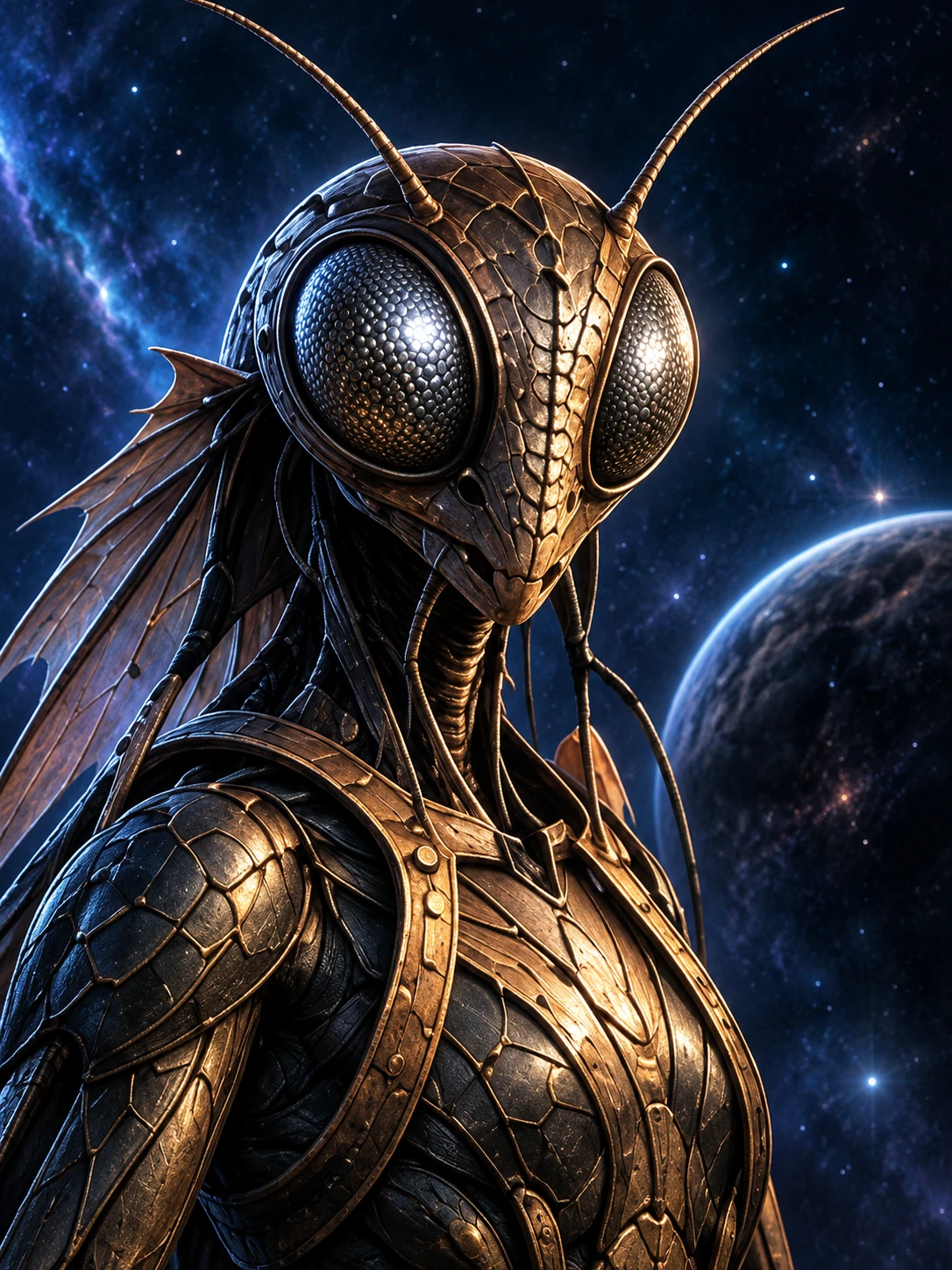
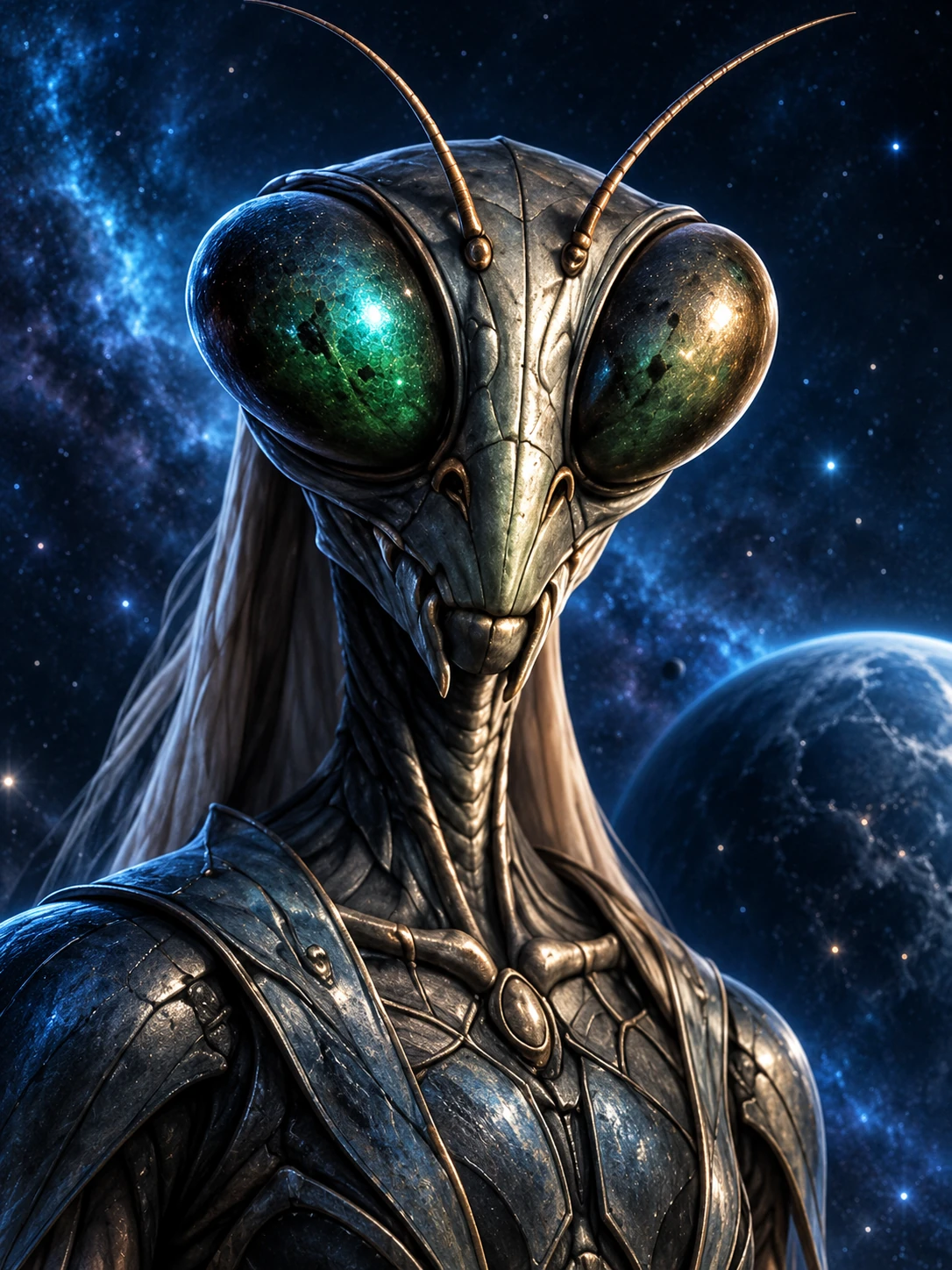
Abduction narratives describe almost nothing that could be called culture. The Greys appear as a workforce: they arrive, perform procedures, and leave, with no small talk, ritual or visible emotion. Some abductees interpret this as a hive society in which individuality has been bred or engineered out. Others, following the researcher David Jacobs, describe a hierarchy of drones supervised by taller Greys and, in some accounts, by insectoid Mantids.
A minority of witnesses report the opposite: Greys who were curious, gentle or even apologetic, and who explained that their species was dying and needed human genetic material to survive. This 'hybrid programme' story became the dominant reading of the phenomenon in the 1990s.
Technology
The technology described in Grey encounters is medical and clinical. Witnesses describe examination tables, instruments that produce paralysis without contact, devices that pass over or into the body, and implants, usually small metallic objects said to be placed in the nose, ear or limbs. Several such objects have been surgically removed and analysed; none has proved to be of unambiguous non-terrestrial origin. Craft interiors are described as seamless, bright and cold, with light coming from the walls.
Craft
Craft associated with Greys are usually disc-shaped or triangular, from thirty to several hundred feet across, with a pale, sometimes pulsing exterior light. Many abduction accounts begin not with a craft but with a beam of light, a sudden paralysis in bed, or a stretch of 'missing time' on a night drive, with the craft reconstructed only later under hypnosis. That pattern is one reason sceptical researchers treat the craft descriptions with caution.
Communication
Communication is described as telepathic and impersonal. Witnesses report hearing reassurances inside their heads, 'you will not be harmed', 'you will not remember', in a voice without accent or emotion. Direct eye contact with a Grey is a recurring element and is described as overwhelming, sometimes as the moment the witness lost the ability to move. Spoken language is almost never reported.
Earth encounters
The modern Grey begins with Betty and Barney Hill, a New Hampshire couple who reported a close encounter on 19 September 1961 and, under hypnosis in 1964, described being taken aboard a craft and examined by small grey beings. John Fuller's 1966 book The Interrupted Journey made the case famous, and a 1975 television film fixed the image. In November 1975 the Travis Walton case in Arizona added a five-day disappearance and a widely publicised polygraph controversy.
The decisive moment was 1987, when Whitley Strieber's Communion, a first-person account of visitation, spent months on bestseller lists with a Grey face on the cover. Budd Hopkins's Intruders the same year and David Jacobs's Secret Life in 1992 established the hybrid-programme narrative. From that point the Grey was the default alien in Western culture, appearing in The X-Files, in advertising, and in emoji.
Several cases beyond the Hill and Walton stories shaped the type. In 1973 two shipyard workers, Charles Hickson and Calvin Parker, reported being taken aboard a craft at Pascagoula, Mississippi, by wrinkled, clawed beings that differ markedly from the classic Grey; their account is often listed with Grey cases anyway because of its structure. In 1976 four women reported an encounter near Stanford, Kentucky, and in 1994 sixty-two children at the Ariel School in Ruwa, Zimbabwe, described small beings with large eyes beside a landed craft, a case investigated by the Harvard psychiatrist John Mack. The Ariel account remains one of the most discussed because of the number of witnesses and their age.
The abduction phenomenon peaked in public attention in the 1990s, when Mack's Abduction (1994) argued that the experiences were real in some sense even if their nature was unknown, and when a Roper poll commissioned by abduction researchers produced the widely repeated, and widely criticised, estimate that millions of Americans might have been abducted. Interest declined after 2000, and the Grey today is more a cultural icon than an active reporting category.
Lore & history
Before 1961 the beings reported in close encounters were varied: hairy dwarfs, giants, robots, ordinary-looking humans. The Grey's rise to near-monopoly is one of the best-documented examples of cultural feedback in the field. Each famous case supplied the imagery for the next wave of reports, and the image stabilised as it was repeated. That does not settle what, if anything, witnesses experienced, but it is why researchers treat the Grey's consistency as evidence about culture as much as about visitors.
Explanations proposed for the experiences themselves include sleep paralysis, which produces paralysis, a sense of presence and vivid hallucination at the boundary of sleep; confabulation under hypnosis; and the ordinary human tendency to fill gaps in memory with familiar images. XenoAtlas lists the Grey as 'reported' because the first-hand accounts exist in volume, and as unverified because none has produced physical evidence that survives scrutiny.
Two academic treatments are worth knowing. The folklorist Thomas Bullard catalogued hundreds of abduction narratives in the 1980s and found a stable eight-stage structure, capture, examination, conference, tour, journey, theophany, return, aftermath, which he compared to older traditions of supernatural abduction by fairies and spirits. The psychologist Susan Clancy, in Abducted (2005), interviewed abductees and argued that sleep paralysis, a cultural script and hypnotic memory recovery could account for the experiences without any visitor. Both readings take the witnesses seriously; neither requires a Grey.
Encounters on record
- 1947The Roswell IncidentFoster ranch, near Roswell, New Mexico, USA
- 1957The Antonio Villas Boas CaseNear São Francisco de Sales, Minas Gerais, Brazil
- 1961The Betty and Barney Hill AbductionUS Route 3, White Mountains, New Hampshire, USA
- 1965The Valensole EncounterValensole, Alpes-de-Haute-Provence, France
- 1975The Travis Walton AbductionApache-Sitgreaves National Forest, near Snowflake, Arizona, USA
- 1976The Allagash AbductionsEagle Lake, Allagash Wilderness Waterway, Maine, USA
- 1985Whitley Strieber and CommunionA cabin in upstate New York, USA
- 1994The Ariel School EncounterRuwa, near Harare, Zimbabwe
Source notes
- Grey alien — cultural history of the archetype · encyclopedic summary
- John G. Fuller, The Interrupted Journey (1966) · case literatureFind on Amazon
- Whitley Strieber, Communion (1987) · first-person accountFind on Amazon
- Budd Hopkins, Missing Time (1981) · abduction literatureFind on Amazon
- Susan A. Clancy, Abducted: How People Come to Believe They Were Kidnapped by Aliens (2005) · psychologyFind on Amazon
Book links go to Amazon. As an Amazon Associate, XenoAtlas earns from qualifying purchases at no extra cost to you.
XenoAtlas documents extraterrestrial concepts appearing in mythology, contactee literature, popular culture, speculative accounts, and related sources. Inclusion does not constitute scientific verification.
Side by side
Related species
See every type in the Types of Aliens guide.