

Mantid vs Grey
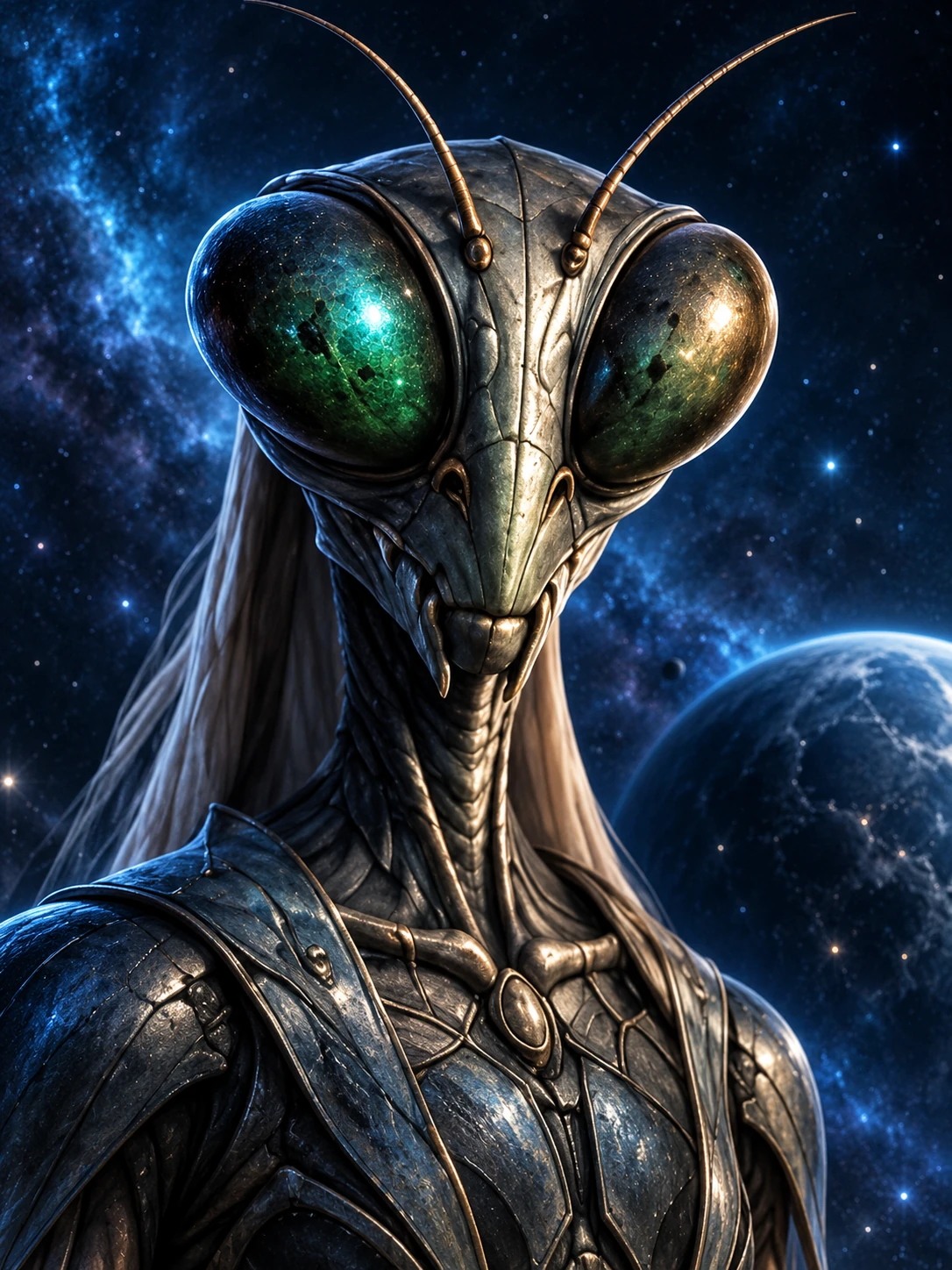
No. The Mantid is a tall insect-like figure reported as the Greys' supervisor in some abduction accounts; the Grey is the small examiner.

The difference
In accounts where both appear, the Mantid is the senior figure: taller, calmer, and described as directing the Greys during an examination. Greys are the workforce of the abduction narrative; Mantids are its rarely seen supervisors.
Mantid reports are far fewer, and they arrive almost entirely through the same hypnosis sessions that produced the Greys.
At a glance
| Field | Mantid | Grey |
|---|---|---|
| Classification | Reported | Reported |
| Evidence | Reported, Contactee lore | Reported, Contactee lore |
| Claimed origin | Unknown | Zeta Reticuli |
| Homeworld | Unknown | Zeta Reticuli |
| Reported height | 6′7″ – 8′10″ | 2′11″ – 4′11″ |
| Appearance | Mantis-like head, compound eyes, elongated limbs | Grey skin, large black eyes, slender limbs |
| Lifespan | Unknown | Unknown |
| Social structure | Described as a supervisory caste | Reported as hive-like or role-based |
| Technology | Described as biological and telepathic | Reported as highly advanced, clinical |
| Traits | Highly intelligent, telepathic, non-human perspective | Reported as detached, methodical, silent |
| Relationship to Earth | Reported as overseers in a subset of abduction accounts | Central to abduction narratives since the 1960s |
How to tell them apart
- Mantid is reported as the taller of the two (6′7″ – 8′10″, against 2′11″ – 4′11″ for Grey).
- Mantid is filed under Insectoid types; Grey under Greys.
- Reported height: Mantid 6′7″ – 8′10″; Grey 2′11″ – 4′11″.
- Claimed origin: Mantid Unknown; Grey Zeta Reticuli.
- Case files in the Atlas: Mantid 0; Grey 8.
In their own dossiers
The Mantid is the most specific of the insectoid reports. Witnesses describe a being between six and nine feet tall, thin to the point of frailty, with a triangular head, large dark or iridescent eyes, a small mouth, folding forelimbs, and a hunched posture that recalls a praying mantis at rest. Colouring is described as brown, green, grey or gold. Some accounts add a segmented body or a robe-like covering. Movement is slow and deliberate, and the being is almost always described as standing back from the action.
The Grey is described with more consistency than any other type, partly because the image has been reinforced by decades of book covers, films and television. Witnesses report a being between three and five feet tall with a large, smooth, hairless head that is wide at the cranium and narrow at the chin. The eyes dominate the face: enormous, black, almond-shaped, wrapping slightly around the sides of the head, with no visible pupil, iris or white. The nose is two small openings, the mouth a thin slit that is rarely seen to move, and ears are absent or vestigial.
More comparisons
XenoAtlas documents extraterrestrial concepts appearing in mythology, contactee literature, popular culture, speculative accounts, and related sources. Inclusion does not constitute scientific verification.