

Greys
The small, large-eyed figure of the modern abduction narrative
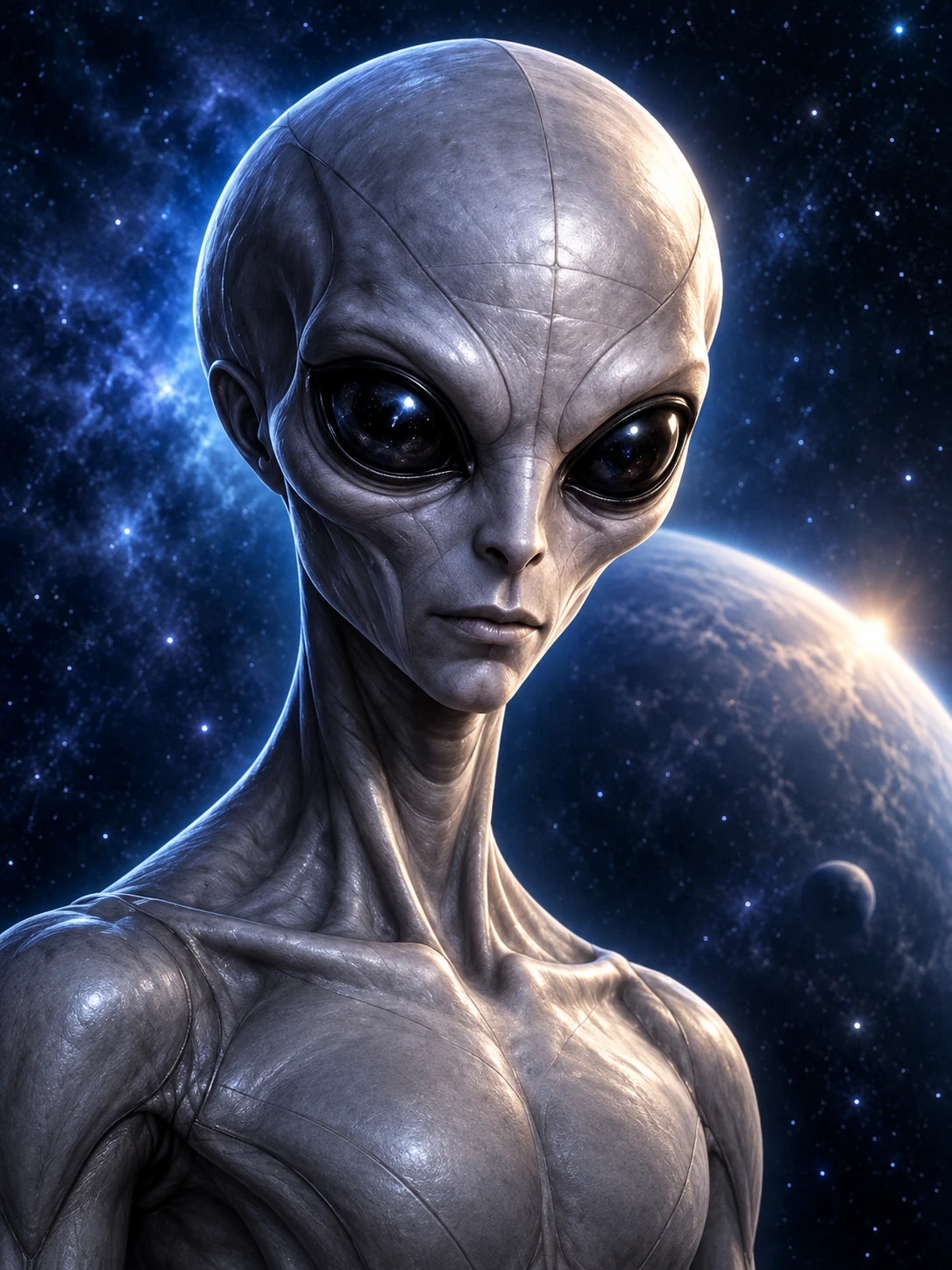
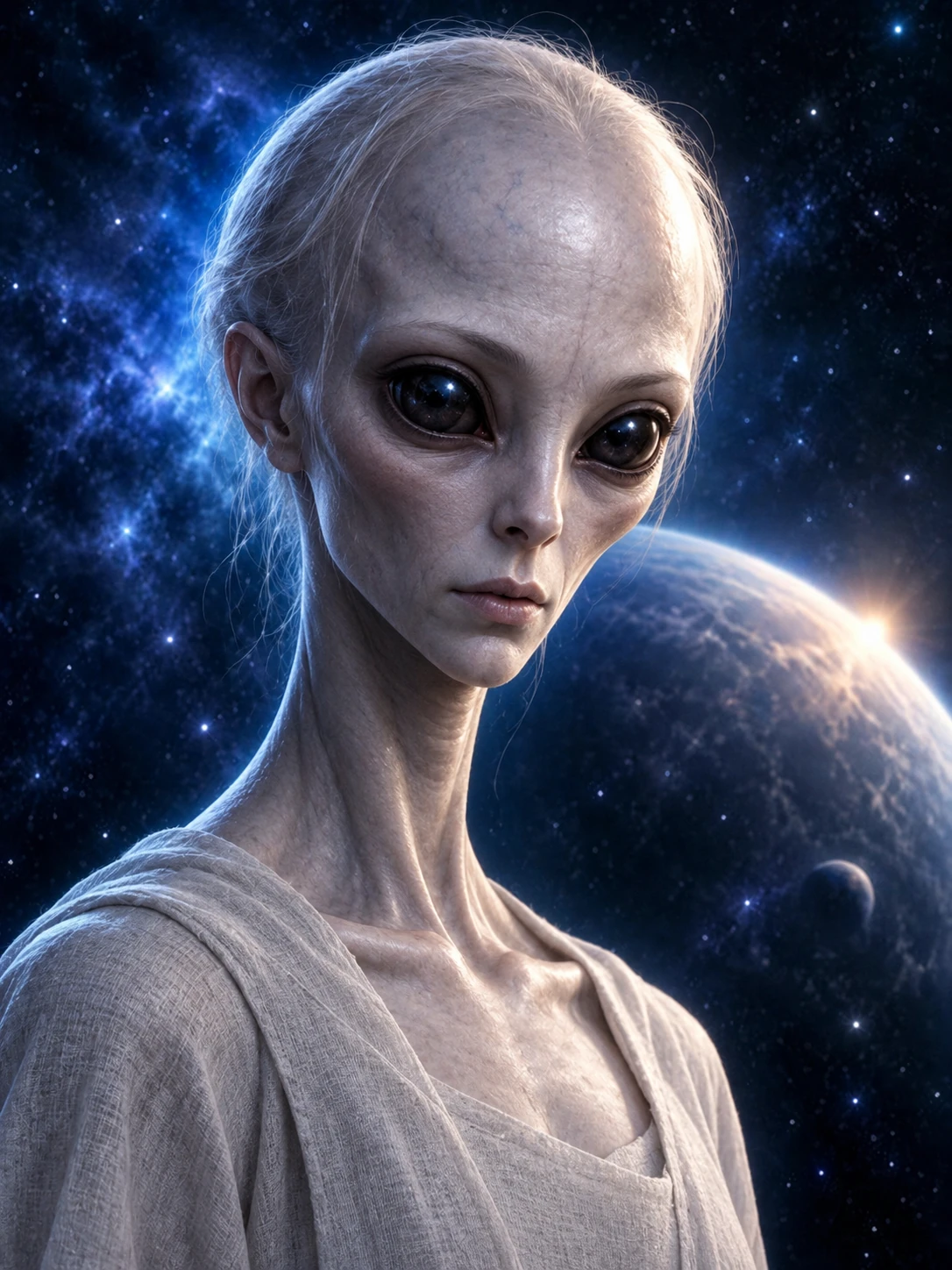
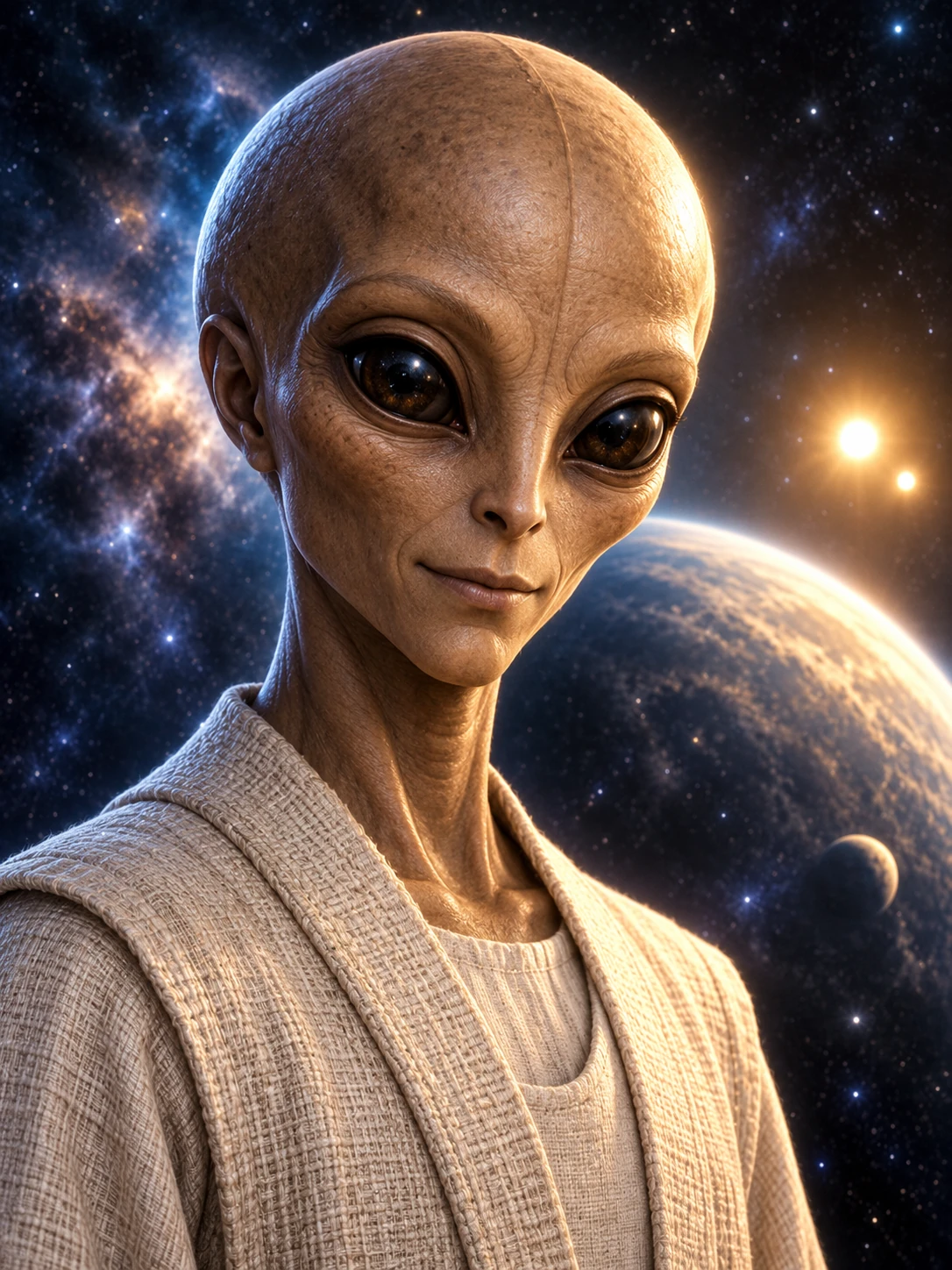
The family
The Grey is the alien most people picture first: a slender being under five feet tall with an oversized hairless head, grey skin and enormous black almond-shaped eyes. It became the dominant reported type after the 1961 Betty and Barney Hill case and was cemented by Whitley Strieber's 1987 book Communion, whose cover put the face on bookshop shelves worldwide.
Greys are the only type that appears more often in first-hand witness reports than in channelled writing. That does not make them verified. Researchers have proposed sleep paralysis, hypnotic confabulation and cultural feedback as explanations, and the way the Grey displaced the far more varied occupants reported before 1960 is itself a well-documented cultural shift.
- Common traits
- Short stature, 3′ to 5′
- Large head, black eyes, minimal features
- Reported in clinical, procedural encounters
- Associated in lore with Zeta Reticuli
- Where it comes from
- Abduction case literature, 1961 onward.
How to recognise it, and how the members differ
Three to five feet tall, a large hairless head, grey or pale skin, black almond eyes that wrap toward the temples, a small mouth, no visible ears. Movement is described as gliding and coordinated; emotion is absent or read as clinical curiosity. The setting is nearly always a bedroom or a car at night.
The Grey is the generic figure; the Eben is the same body with a backstory from the Serpo posts; the Hybrid is the alleged child, distinguished by human hair, expression and a slighter build. In reports where more than one being appears, the Greys are the workers and something taller, a Mantid or a 'Nordic', is in charge.
Where it came from
The type has a precise birthday: the Betty and Barney Hill hypnosis sessions of 1964, publicised in 1965 and filmed in 1975. Valensole in 1965 offered a similar body from an unconnected French witness. Budd Hopkins's Missing Time (1981) made the Grey the standard abductor, and the cover of Communion (1987) fixed its face for good.
By the 1990s the Grey was the default alien of film, television and toy shelves, and reports followed. Nearly every abduction account since describes some version of it, which supporters read as consistency and sceptics as saturation.
The sceptical reading
The Grey's history is the strongest evidence for the psychosocial reading of the whole subject: its features can be dated to specific broadcasts and book covers, its typical encounter matches sleep paralysis point for point, and its 'memories' come mainly through hypnosis. Against that, the family has the largest body of sincere first-hand testimony in the field, and a few cases, Valensole among them, that predate the imagery.
Case files involving this family
Side by side
XenoAtlas documents extraterrestrial concepts appearing in mythology, contactee literature, popular culture, speculative accounts, and related sources. Inclusion does not constitute scientific verification.