

The Ariel School Encounter
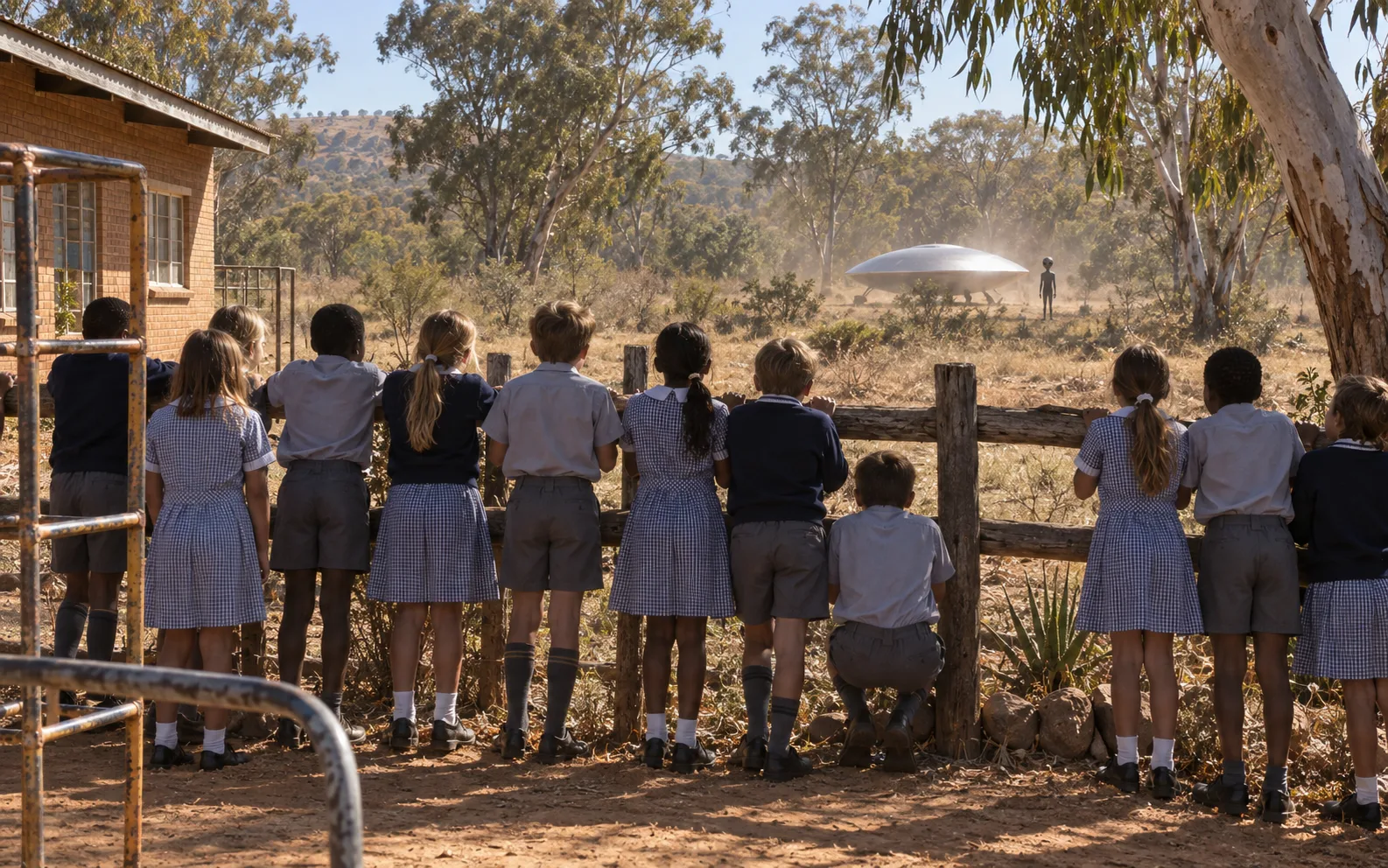
During a morning break, dozens of schoolchildren said a craft landed beyond the playground and small beings with large eyes approached them. Their drawings and interviews, recorded within days, make it the largest child-witness case on record.
- Date
- 16 September 1994
- Place
- Ruwa, near Harare, Zimbabwe
- Witnesses
- Sixty-two children, aged six to twelve
- Status
- Unresolved
What happened
At about ten in the morning, during break at the Ariel School, a private primary school outside Harare, children playing near the edge of the grounds saw one or more silver objects descend near the trees. Several said a small being in a tight dark suit walked toward them, and a second stood on the craft. Some children said the being looked into their eyes and that they received a thought about the environment being damaged. The teachers were in a staff meeting and saw nothing. When the bell rang, the children came in agitated, and the headmaster had them draw what they had seen.
The BBC's Harare correspondent Tim Leach visited within days and filmed interviews. Two months later, the Harvard psychiatrist John Mack and a colleague interviewed the children on camera. Their accounts were consistent in outline and varied in detail, as genuine multi-witness accounts do.
The beings
The children described a small figure, about a metre tall, with a large head, very large black eyes, long black hair in some drawings and none in others, thin limbs and a dark one-piece suit. The drawings resemble the Grey with a few local variations. Several children described the eyes as the central and frightening feature.
Aftermath
Mack's involvement gave the case international attention, and the interviews were used in the 2022 documentary Ariel Phenomenon, which also followed the witnesses as adults. Most maintain their accounts. The school still exists, and the site is a stop for visiting researchers.
Explanations
Sceptics note that the school had been discussing a widely reported fireball over southern Africa two days earlier, that the first children to see something may have shaped what the rest reported, and that leading questions in the interviews could have reinforced the story. Supporters point to the number of witnesses, their ages, the speed with which the drawings were made and the consistency of adult recollections decades later. No physical trace was found.
Beings described

Sources
Book links go to Amazon. As an Amazon Associate, XenoAtlas earns from qualifying purchases at no extra cost to you. Every book the Atlas cites is shelved in the Reading Room.