

What might an alien planet look like?
Nobody knows. But the accounts describe places, and this is what those descriptions look like when rendered as landscapes: the forest of Lyra, the ocean of Sirius, the dim desert of Zeta Reticuli. Each imagined world is set honestly beside what astronomy actually finds at the star the lore names. The images are speculative illustrations built from the descriptions, never evidence.
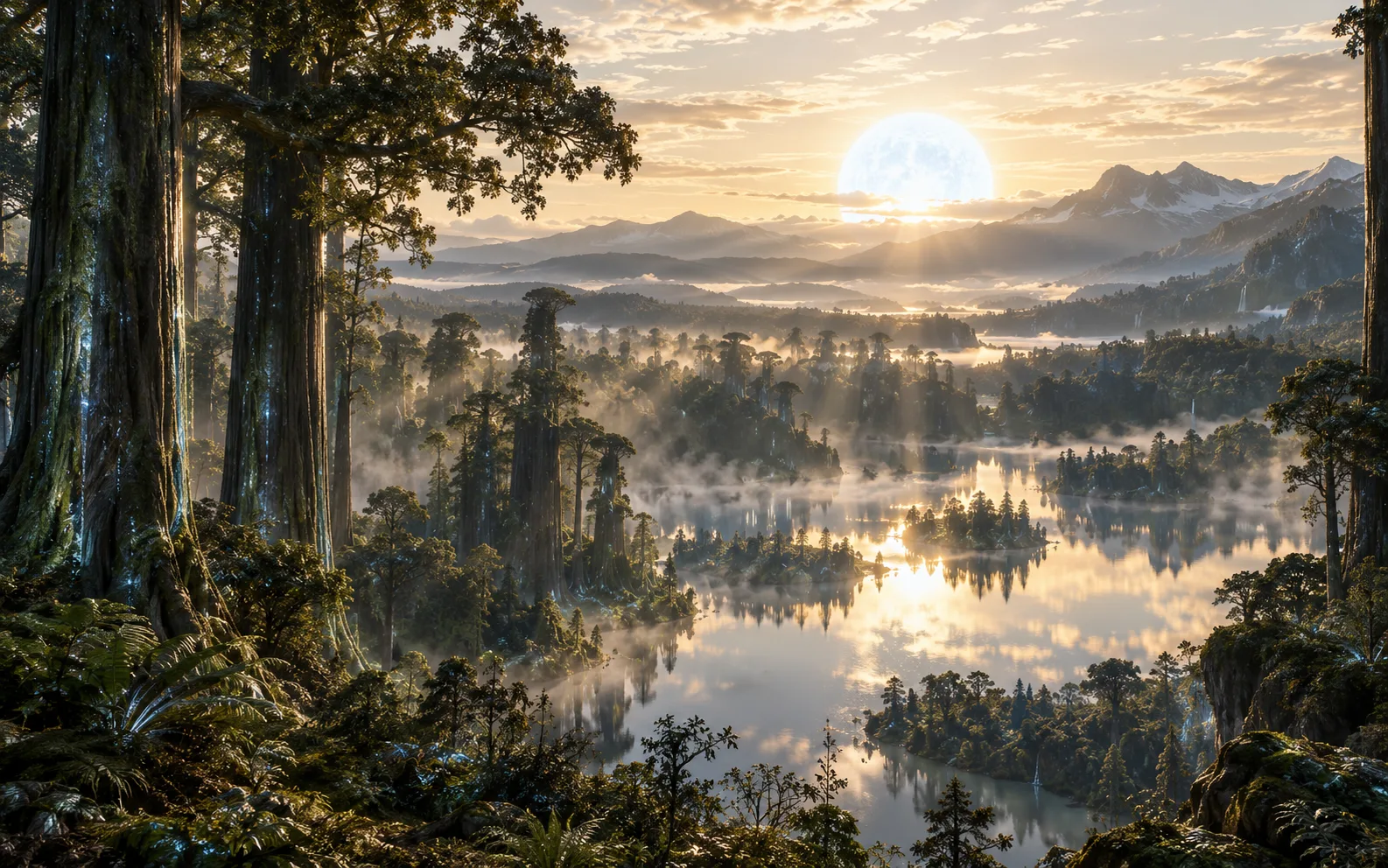
The forests of Lyra
The luminous, temperate cradle the tall fair races call their origin.
Contactee and channelled sources describe the Lyran homeworld as a temperate, forested paradise bathed in a soft golden-white light, the cradle from which the tall, fair, human-like races are said to have spread. Accounts speak of vast old-growth forests, mirror-still lakes, and a sky in which the bright star Vega hangs like a second, gentler sun.
The mood in every telling is serenity: a world without hurry, its people stewards rather than builders. It is less a described place than an ideal, the Eden the human-like archetype needs behind it.
What astronomy finds Vega is a real star 25 light-years away, young, fast-spinning and ringed by a debris disc. At around 450 million years old it is almost certainly too young for a world with old forests, and no planet there is confirmed.
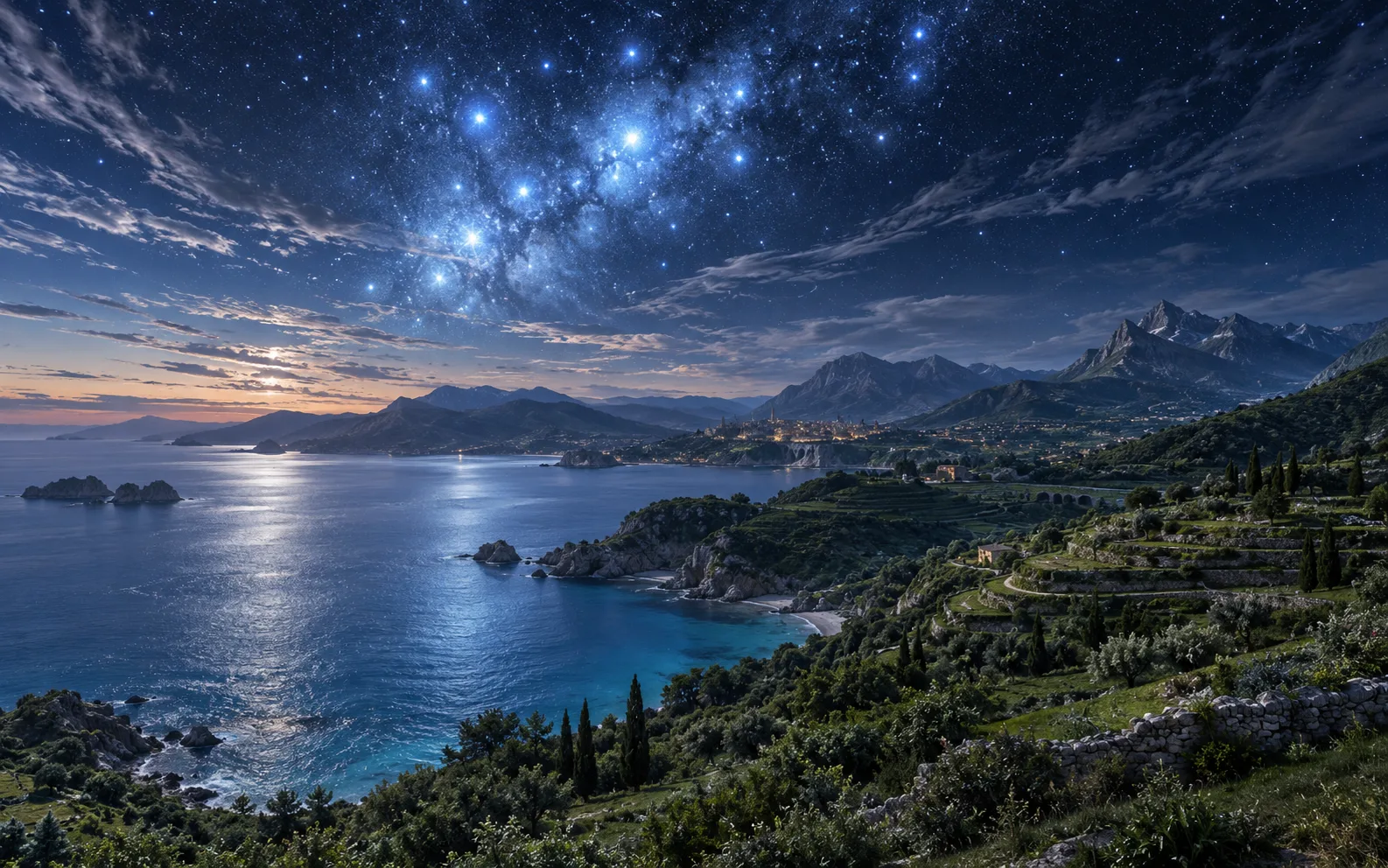
Erra of the Pleiades
The Earth-like paradise of the Pleiadian contact accounts.
In the Meier contact accounts, the Pleiadian home 'Erra' is an Earth-like world, cooler and less crowded than our own, with clean seas, terraced gardens and a small, spiritually advanced population living in harmony with the land. The defining image is the night sky: from Erra the stars of the Pleiades cluster blaze close and blue overhead, a permanent jewelled canopy.
It is described as what Earth could be, a paradise of restraint rather than abundance.
What astronomy finds The Pleiades is a real open cluster 444 light-years away, but only about 100 million years old and dominated by hot blue stars that will not live long. Evolved life there is unlikely by any current model, and 'Erra' has no astronomical counterpart.

The ocean world of Sirius
A water world beneath a brilliant twin sun, home of the amphibious teachers.
Drawing on the Dogon Nommo and older star lore, the Sirian home is imagined as a great ocean world, its surface almost entirely water broken by scattered reef-islands, lit by the fierce white glare of Sirius and the faint spark of its companion. The amphibious teachers of myth are said to have come from its seas to bring the arts of civilisation.
The recurring image is of a blinding double sun over an endless bright ocean, and of cities that are as much beneath the waves as above them.
What astronomy finds Sirius is the brightest star in our night sky, 8.6 light-years away, a hot white star with a white-dwarf companion, Sirius B. No planets are known, and the white dwarf's violent past makes stable habitable orbits doubtful.
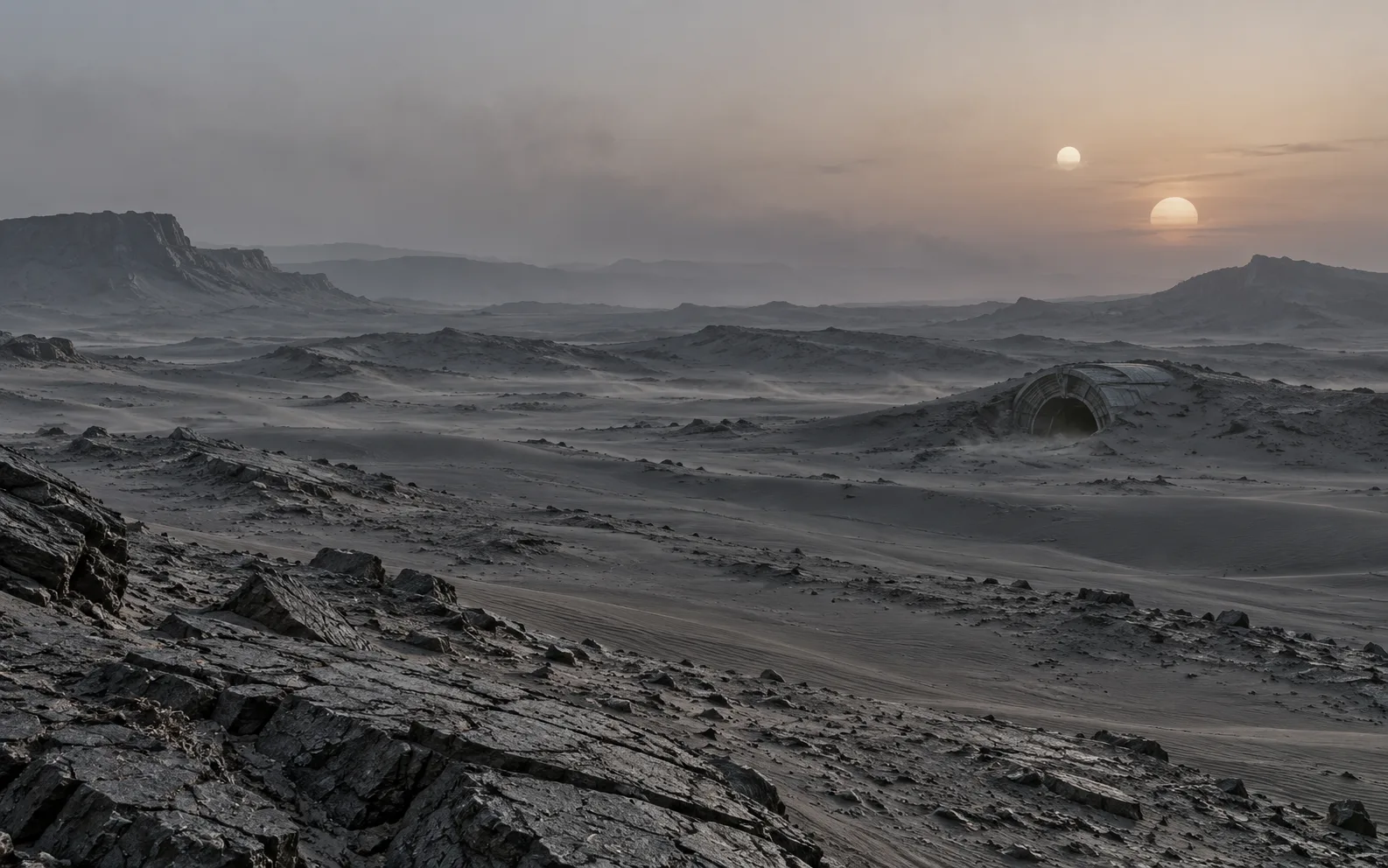
The dim worlds of Zeta Reticuli
The arid, twin-sun home assigned to the Greys by the Hill star map.
Since Marjorie Fish read Betty Hill's star map as a view from Zeta Reticuli, the Grey's homeworld has been imagined as a harsh, arid place: a dim, wind-scoured desert under two pale suns, its atmosphere thin and its life driven underground. The Serpo story adds high radiation, long days and a controlled, subterranean society.
The image is austere, the opposite of the Lyran paradise: a dying-looking surface and a people who live beneath it.
What astronomy finds Zeta Reticuli is a real wide pair of Sun-like stars 39 light-years away, visible from the southern hemisphere. No confirmed planets orbit either; a claimed dust disc around one was withdrawn.
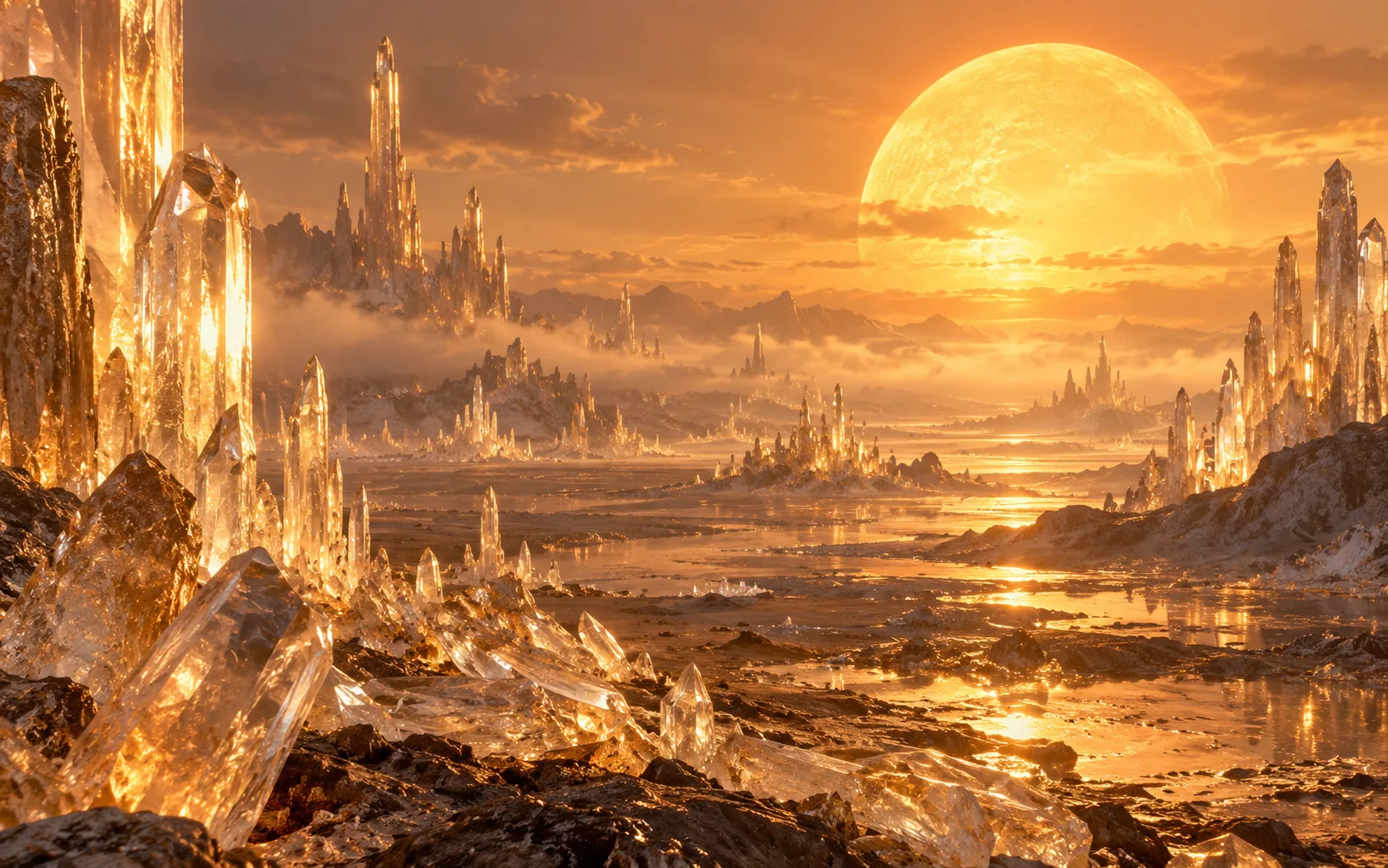
The light of Arcturus
An ethereal realm of light rather than a solid world.
The Arcturian home is rarely described as ground and sky at all. Channelled sources render it as a realm of light and geometry, a luminous, crystalline environment more felt than seen, where the beings exist as glowing forms in an amber radiance. Where a landscape is imagined, it is one of impossible crystal spires under an orange giant sun.
It is the least physical of the homeworlds, closer to a state of being than a planet.
What astronomy finds Arcturus is a real orange giant star 37 light-years away, near the end of its life and the brightest in the northern sky. No planets are confirmed, and a dying giant is a poor host for a stable world.

The furnace worlds of Draco
A hot, volcanic homeworld for the reptilian ruling caste.
Conspiracy and channelled literature imagine the Draconian home as harsh and hot: a world of black volcanic rock, sulphur skies and shallow warm seas, a reptile's planet where strength and hierarchy are bred by the environment itself. The ruling caste is said to have spread from here across a stellar empire.
The image is of red-lit basalt plains under a heavy sky, a world built for predators.
What astronomy finds Thuban is a real white giant star 300 light-years away, and was the pole star when the Egyptian pyramids were built. No planets are known; it was chosen for the Draconians by name association with the dragon constellation.
The star-cities of Orion
A luminous, contested region imagined as the seat of an empire.
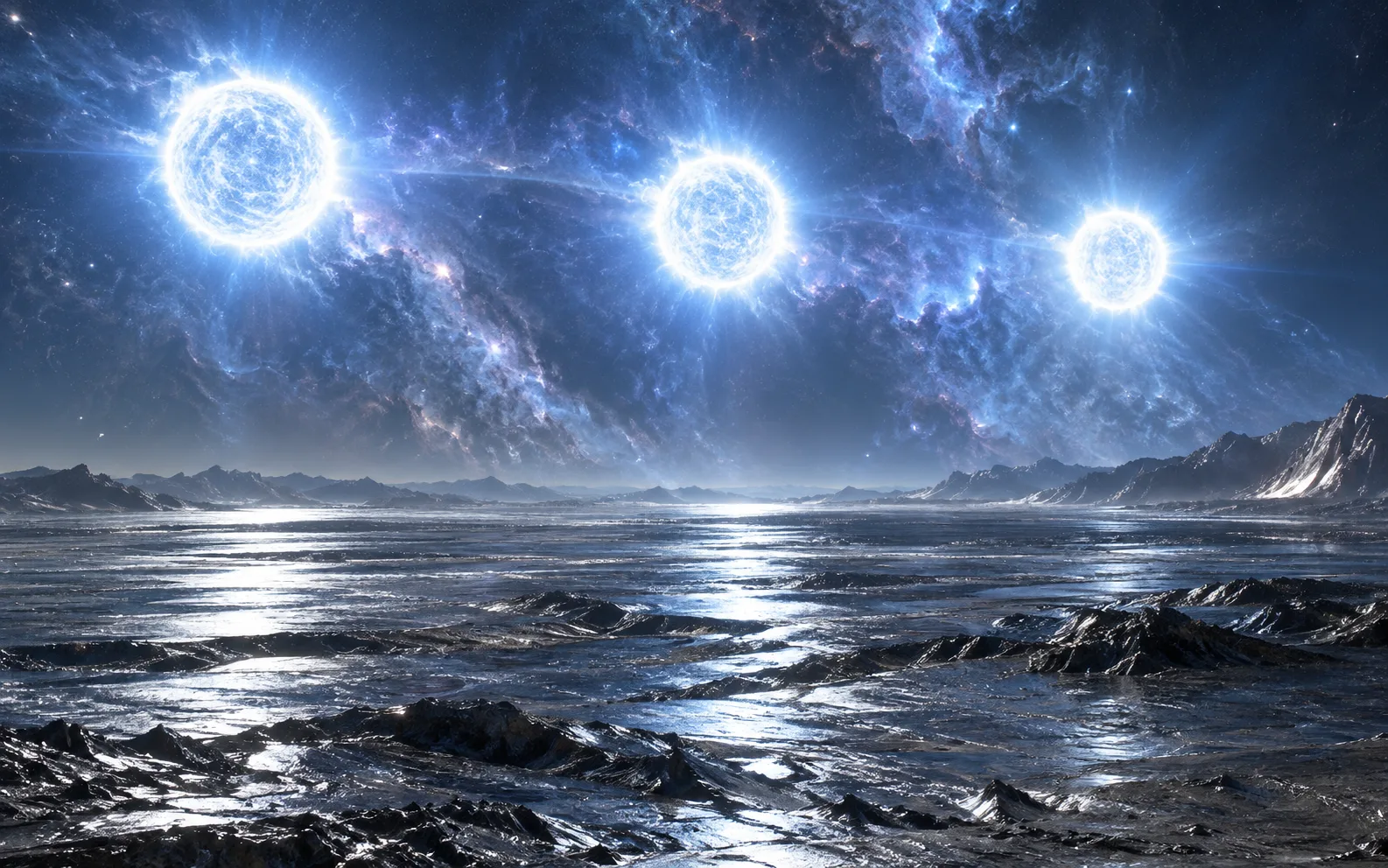
Orion is cast in the channelled 'galactic history' as a vast contested empire rather than a single world. Its imagined home is a bright, hard-edged place: a world close to blazing blue supergiants, its skies never fully dark, its surface a mix of gleaming cities and scorched plains fought over for ages.
The mood is grandeur and conflict, a civilisation defined by its wars.
What astronomy finds Orion's Belt is three real blue supergiant stars over a thousand light-years away, only a few million years old, with the star-forming Orion Nebula below them. Far too young and violent for evolved life; the region is a stellar nursery, not a home.
Aldebaran, the Bull's eye
A warm, amber-lit world under a vast orange giant.
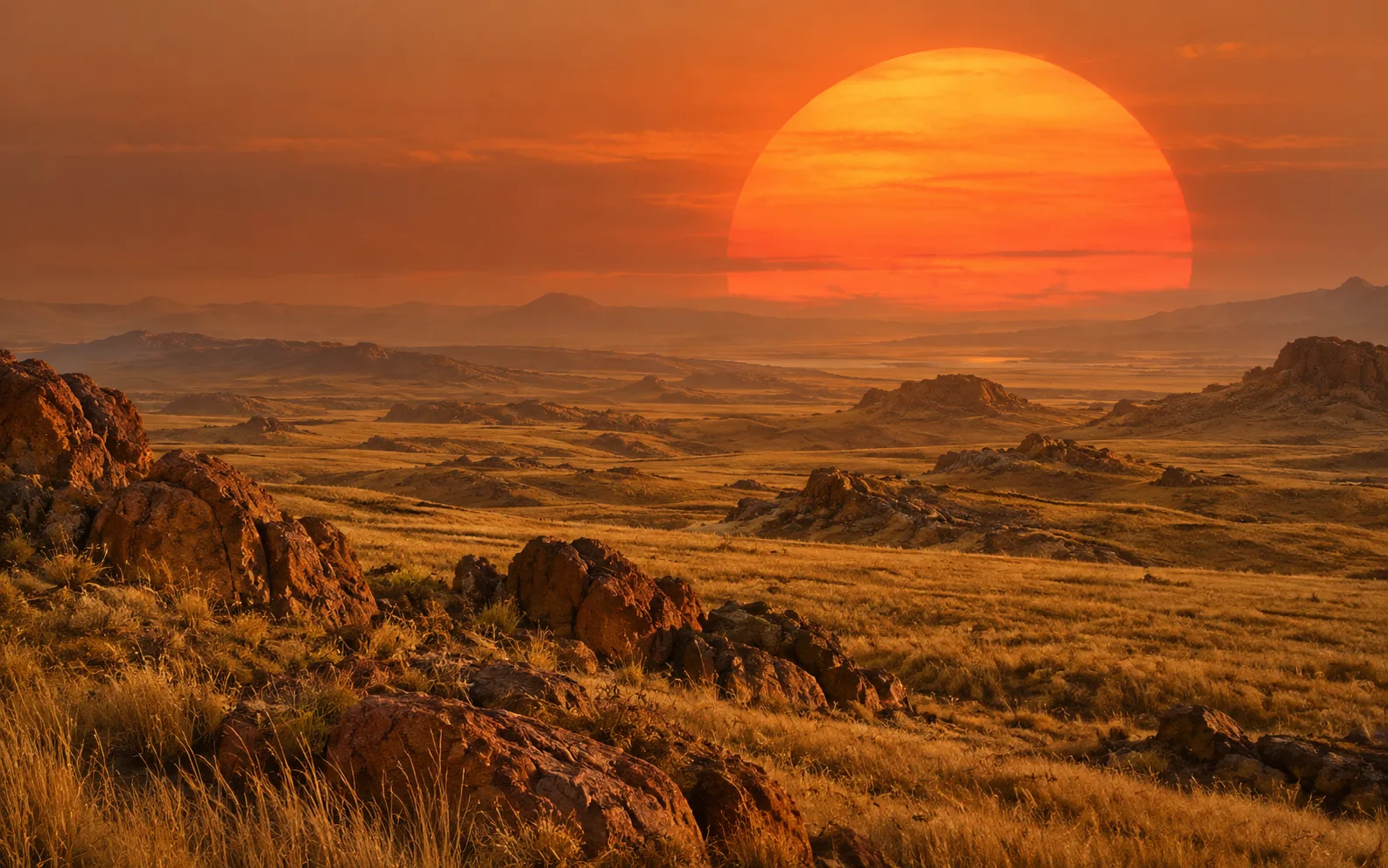
Aldebaran's imagined world is lit by its enormous orange sun hanging low and huge in the sky, bathing a savannah of golden grass and warm stone in amber light. The lore, tangled with old myths of a fair-haired people, pictures a bright, pastoral world under a sun that fills the horizon.
The defining image is the swollen orange star, far larger than our own, dominating everything beneath it.
What astronomy finds Aldebaran is a real orange giant 65 light-years away, the eye of the Bull. A giant planet claimed there in the 1990s was not confirmed by later analysis.
Proxima b, the real one
The nearest confirmed planet, and the only world here astronomy agrees exists.
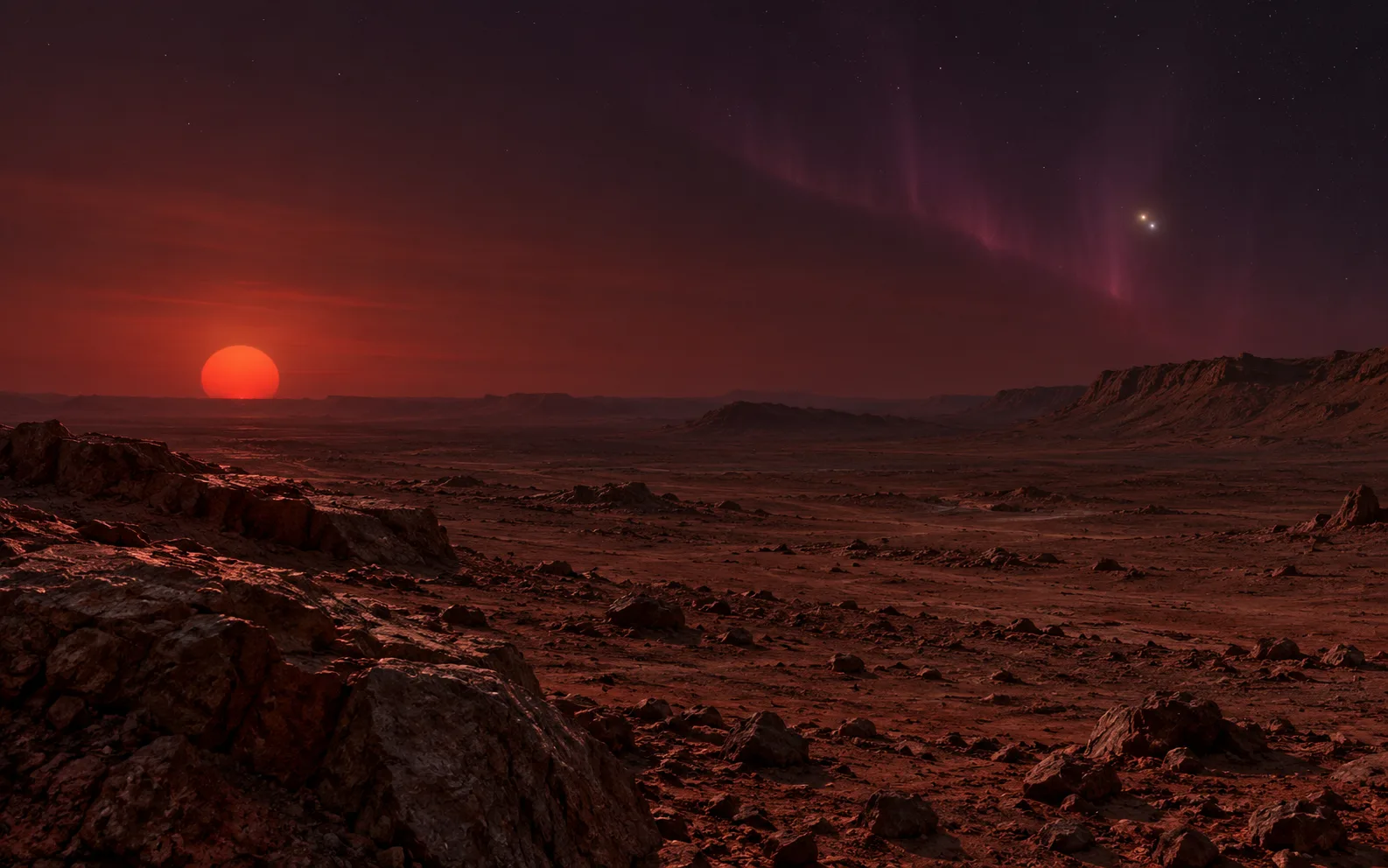
Contactee lore places gentle human-like visitors at Alpha Centauri, but this world is worth imagining for a different reason: it is the one homeworld on the map with a real, confirmed planet. Proxima b orbits the red dwarf Proxima Centauri in its habitable zone, so a scientifically grounded picture is possible: a rocky world under a dim red sun, tidally locked, one face in eternal twilight.
Here the imagined and the actual almost touch, which is exactly why it is the most interesting world of all.
What astronomy finds Alpha Centauri is the nearest star system, 4.4 light-years away. Proxima b is a confirmed planet of roughly Earth's mass in the habitable zone, though frequent stellar flares make its habitability genuinely uncertain. This is real astronomy, not lore.

Venus, dreamed and real
The lush Venus of the 1950s contactees, beside the world the probes found.
When George Adamski met his visitor in 1952, Venus was still a mystery, and the contactees imagined it as a lush, temperate paradise of forests and canals beneath its clouds, home to a beautiful, peaceful people. This page keeps that dream deliberately, because it is one of the clearest cases of an imagined world colliding with reality.
The dreamed Venus is a green world of mist and gardens under a soft veiled sun.
What astronomy finds The real Venus has a surface temperature around 465 °C under a crushing carbon-dioxide atmosphere and clouds of sulphuric acid. Soviet landers photographed its baking, dead surface in the 1970s. Nothing lives there. The contactee Venus is the ghost of a world we had not yet visited.
Nibiru, the wanderer
The rogue planet of Anunnaki lore, on its long dark orbit.
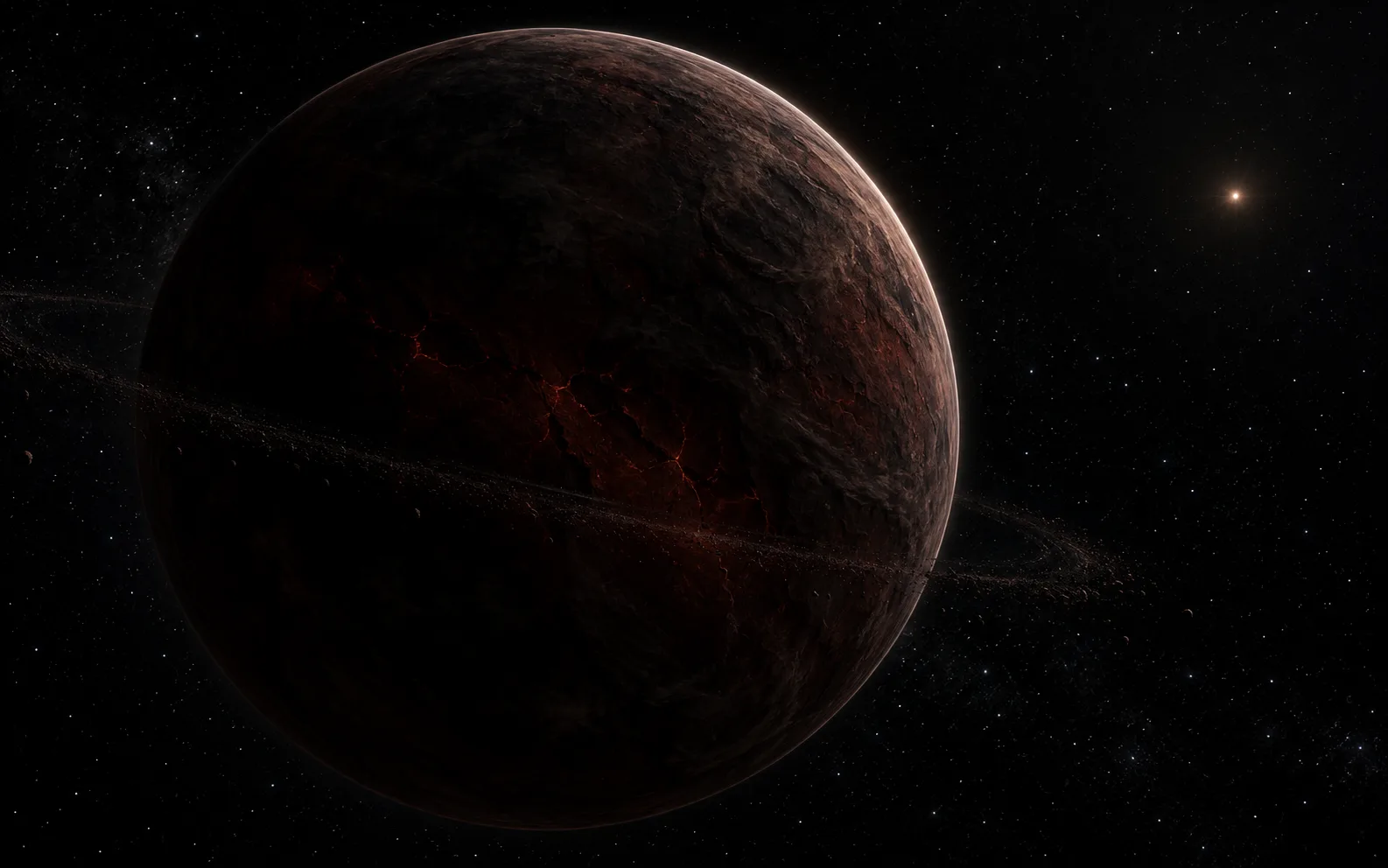
Zecharia Sitchin's Nibiru is imagined as a dark, red-hued world on an enormous elliptical orbit that carries it out into cold and back toward the Sun every few thousand years, home to the Anunnaki who are said to have engineered humanity. The picture is of a shadowed planet lit dimly by a distant sun, glowing with its own reddish inner heat.
It is a world of the deep dark, briefly warmed as it swings past the light.
What astronomy finds No such planet exists. A body on Sitchin's orbit would be visible for years before any approach and would disrupt the orbits of the known planets. Astronomers have ruled it out.

The savannah of the Felinids
A warm hunting world for the feline race of the channelled genealogies.
The channelled literature places the feline races in the Lyra region and pictures their world as a warm, open savannah of tall grass and scattered great trees under a bright sky, a hunter's landscape of long sightlines and golden light. It is imagined as wild and beautiful, matching the grace and independence the Felinid is said to embody.
What astronomy finds The Felinid is a channelled archetype with no sighting record and no confirmed home; the Lyra placement comes from The Prism of Lyra and its successors, not from astronomy.
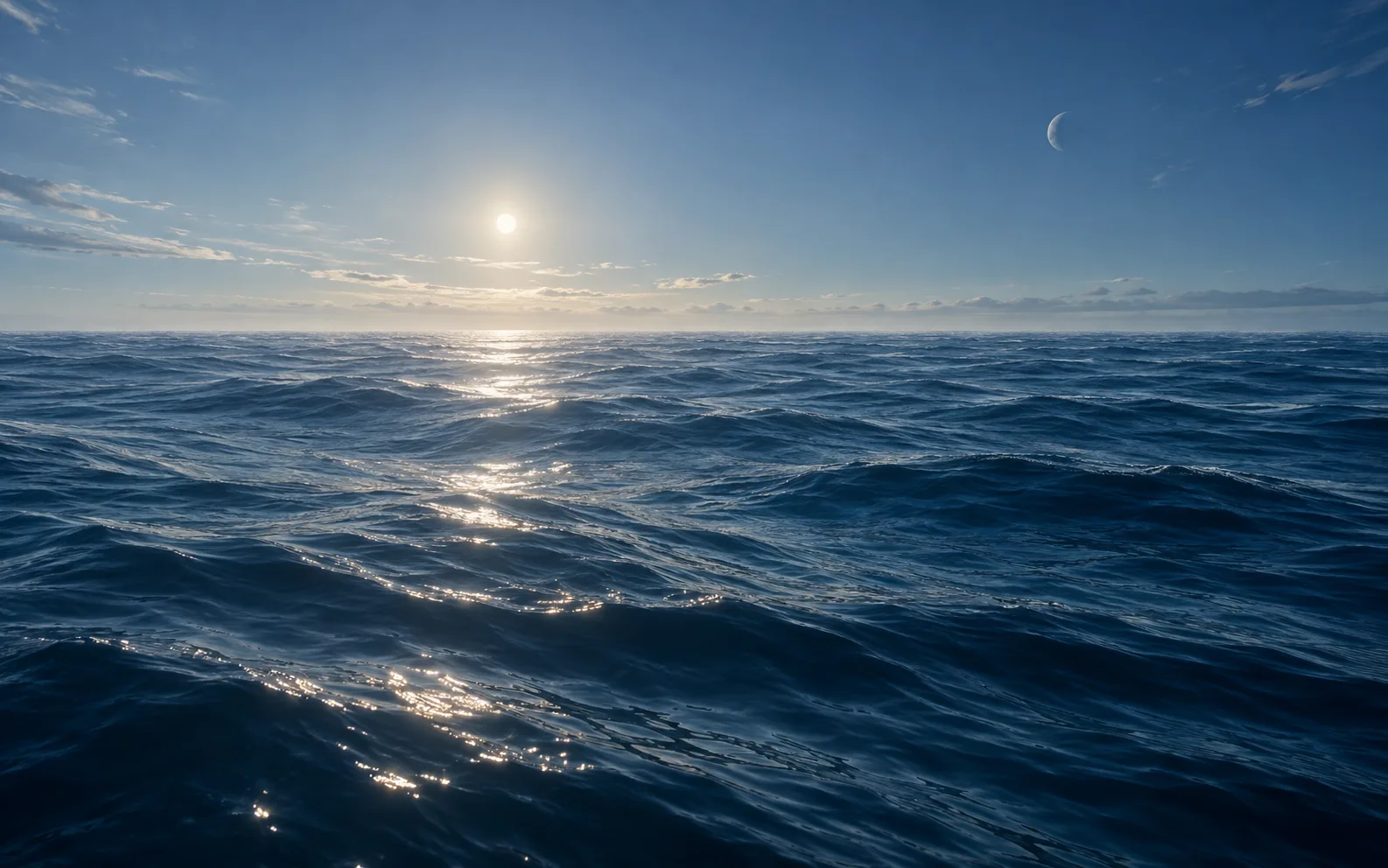
The endless sea of the Aquarians
A total ocean world with no land at all.
The Aquarian home is imagined as a water world without land: an unbroken planetary ocean, its intelligence living entirely beneath the surface, its 'sky' seen only as light filtering down through deep blue water. Where the surface is pictured, it is a horizon of open sea in every direction under a pale sun.
What astronomy finds The Aquarian is a speculative type named for the constellation rather than any star in it; the brightest star of Aquarius, Sadalsuud, is a yellow supergiant 540 light-years away with no known planets.
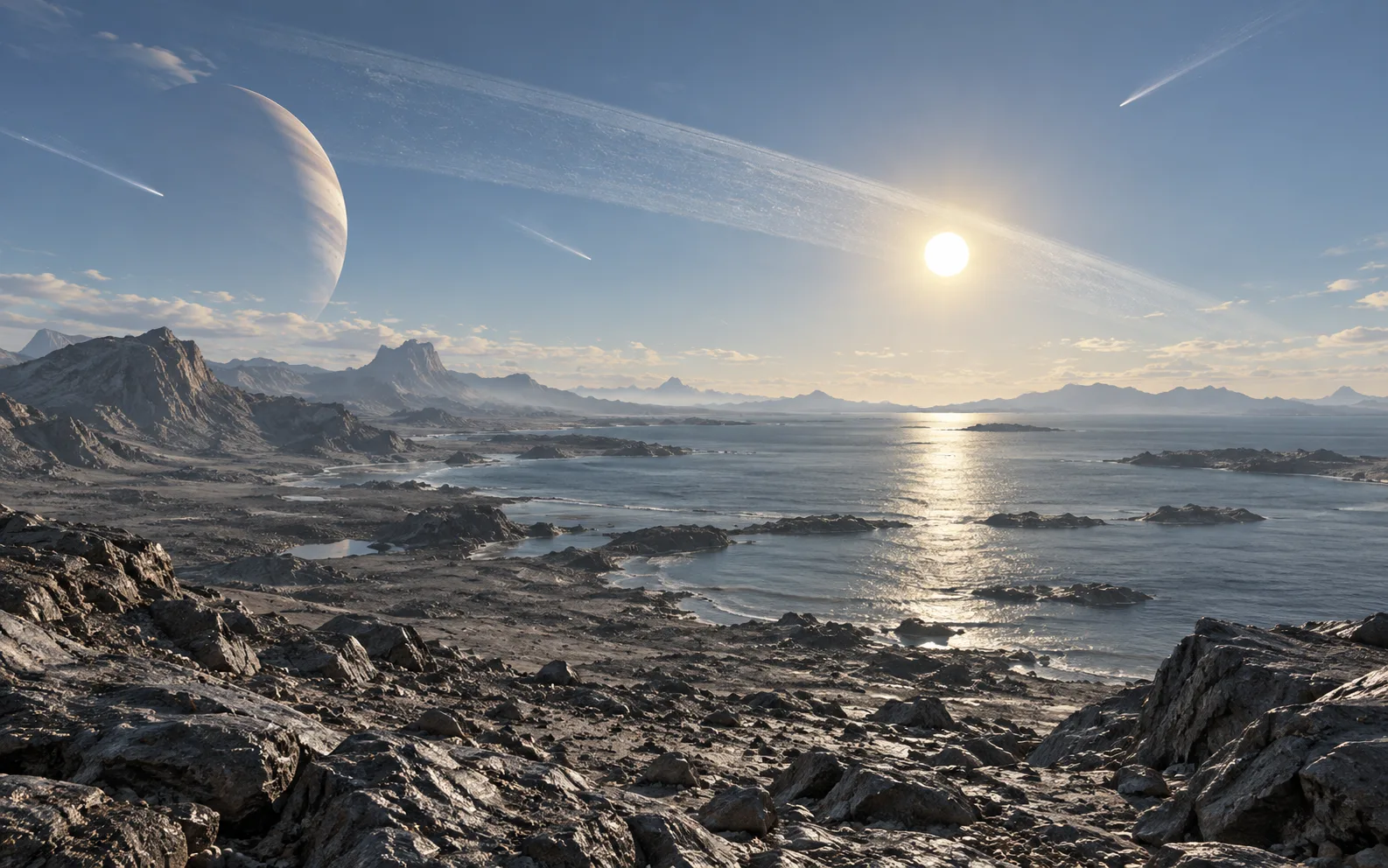
The young world of Epsilon Eridani
A raw, young planetary system loosely tied to the Tall Whites.
Loosely attached to the Tall Whites in online discussion, Epsilon Eridani is imagined as a young, raw world: cool rocky plains and shallow new seas under a Sun-like star, a debris-filled sky bright with the dust of a system still forming, comets and rings overhead.
What astronomy finds Epsilon Eridani is a real young Sun-like star 10.5 light-years away with a debris disc and one confirmed giant planet on a cold orbit. A favourite of science fiction; the Tall White link is a fan inference, not Charles Hall's own claim.
These are illustrations generated from the descriptions in contactee, channelled and folklore sources, not photographs and not evidence. For the real positions of every claimed homeworld, see the star map; for the beings, the species index.