

DraconianThe Dragon Lords
The Draconian is a fictional and folkloric elaboration of the reptilian archetype: an imperial, dragon-like ruling species that appears in science-fiction franchises, role-playing games and conspiracy lore. It is catalogued here as cultural mythology, not as a reported being.
At a glance
- Home system
- Draco (fiction)
- Avg. height
- 6′11″ – 9′10″
- Appearance
- Dragon-like, horned, winged in some portrayals
- Reported lifespan
- Described as thousands of years
- Social structure
- Described as imperial
- Technology
- Described as advanced military
- Primary traits
- Described as commanding, ancient, ruthless
- Relationship to Earth
- A fictional antagonist archetype
Physical profile
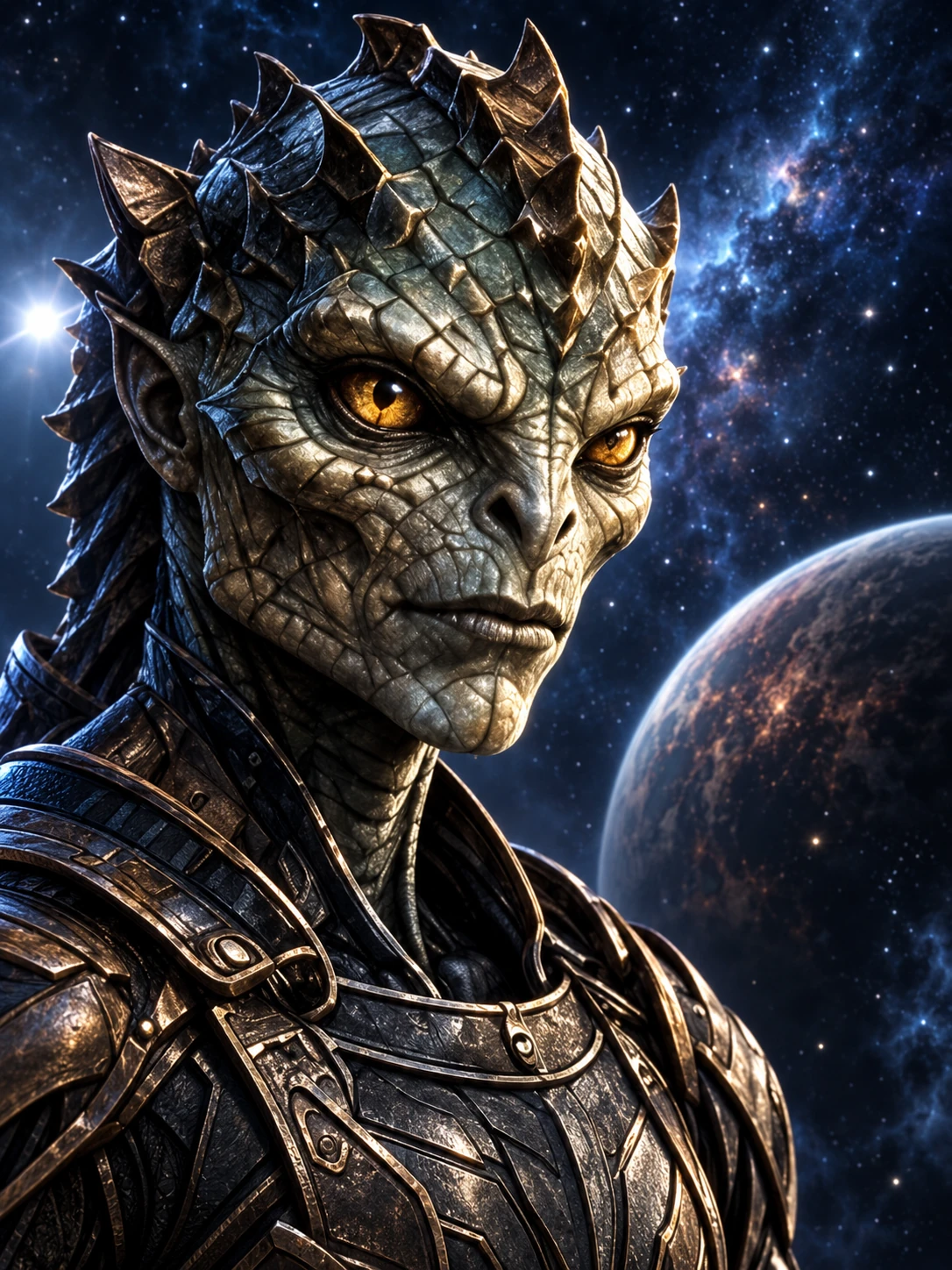
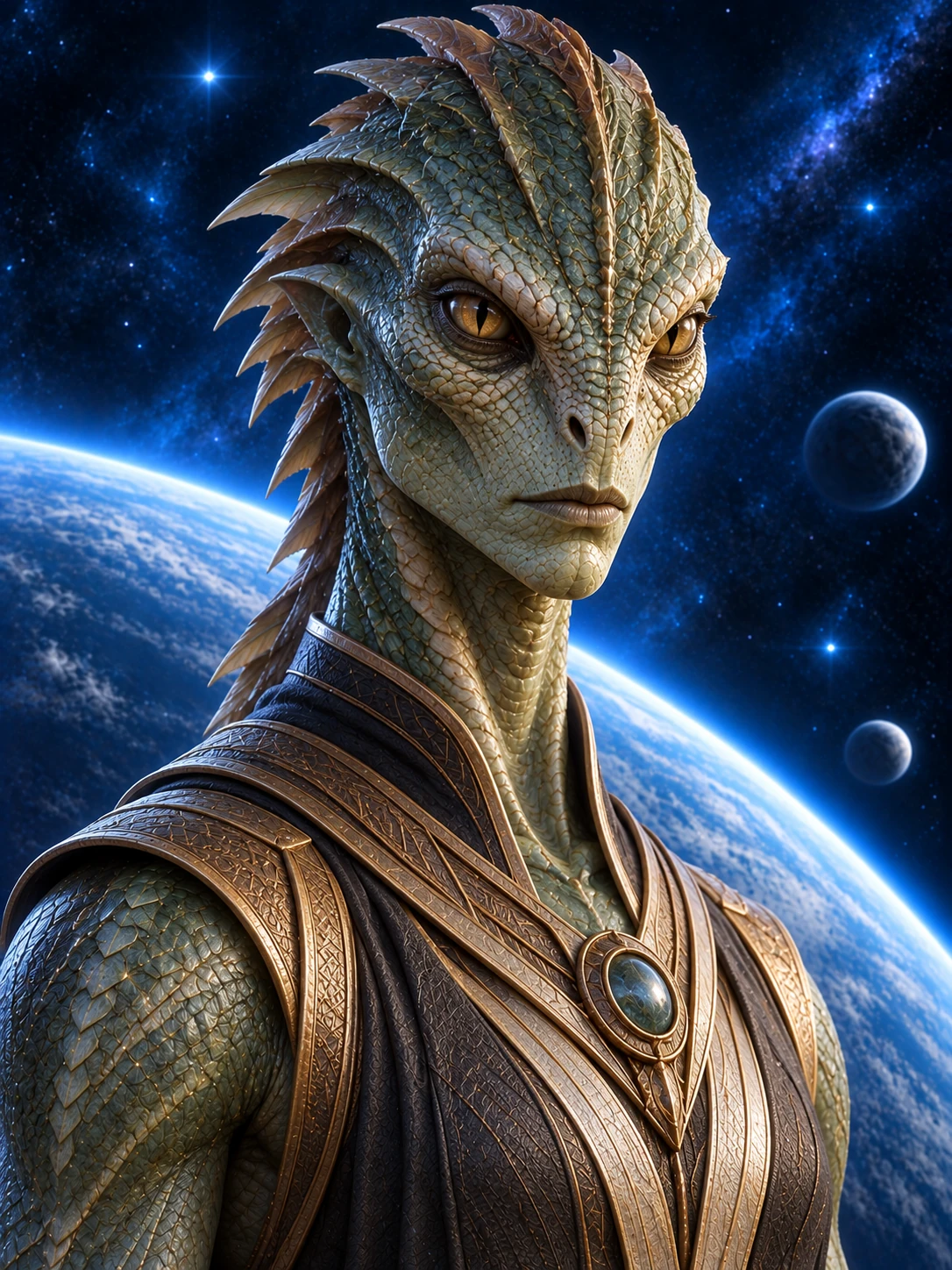
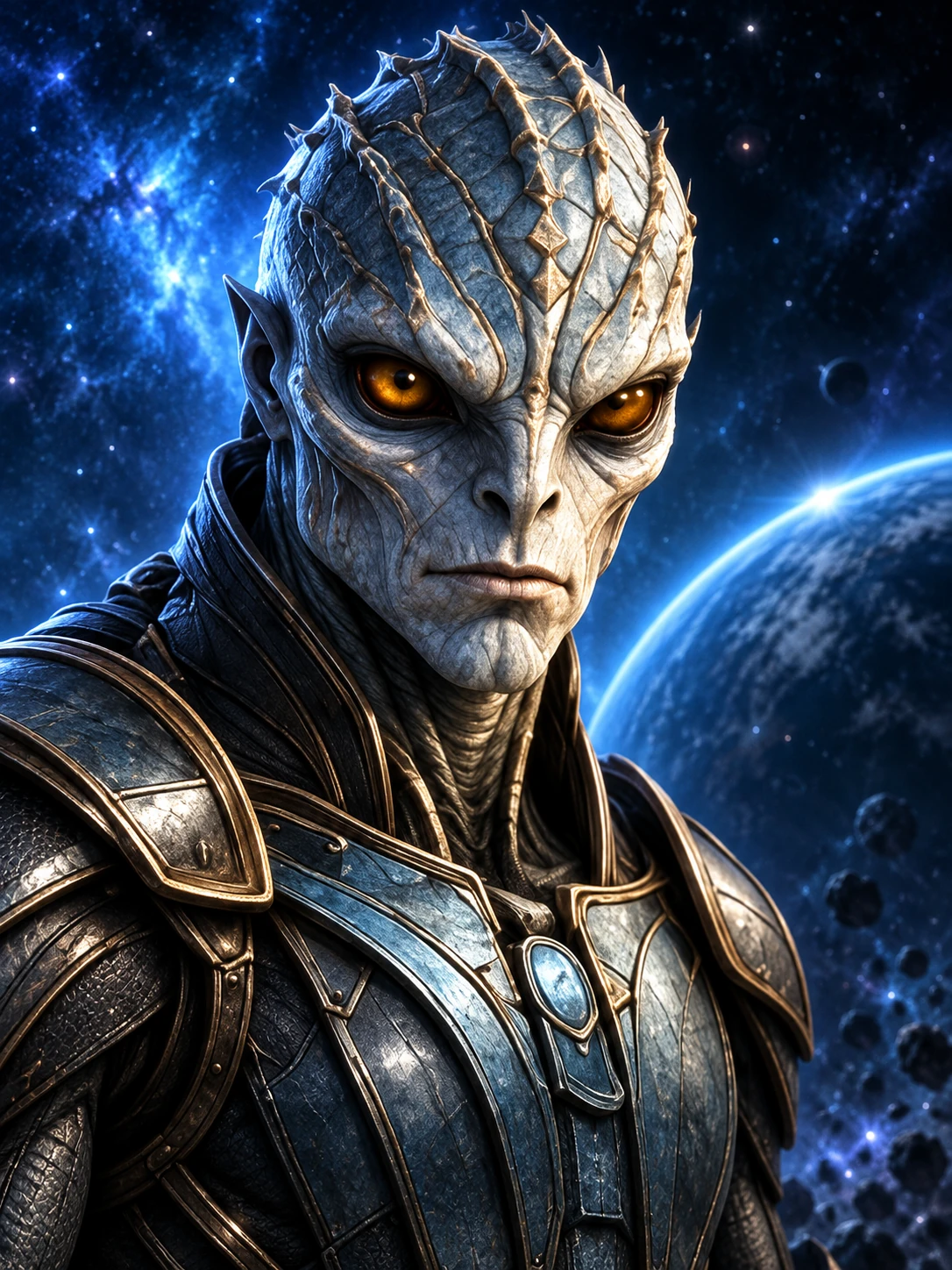
The Draconian is the Reptilian raised to royalty. Fiction and conspiracy writing describe a being seven to ten feet tall, massively built, with red, bronze or black scales, a crown of horns or a bony crest, and in some versions wings. The face is more dragon than lizard, with a heavy brow and pronounced jaw. Armour, insignia and ceremonial dress are common, marking the type as a ruling class rather than a soldier.
Reported origin
The lore assigns the Draconian to Alpha Draconis, or Thuban, the former pole star in the constellation Draco, and sometimes to the region around it as an empire spanning many systems. The choice follows the constellation's name and Thuban's ancient prominence; there is no astronomical basis for it.
Culture
Draconian society is imperial: dynasties, conquest, a rigid caste order, and a self-image as the oldest and most legitimate power in the galaxy. Conspiracy writers such as Alex Collier described the 'Draconian empire' as the antagonist of the benevolent council races. Fiction gives the type the full apparatus of a space empire, with fleets, governors and tribute worlds.
Technology
Portrayed with large fleets, cloaking, energy weapons and genetic engineering, all standard equipment of the fictional galactic empire.
Craft
Vast, dark, angular warships and motherships. No sighting reports describe such vessels with occupants.
Communication
Spoken command language in fiction; telepathic dominance in conspiracy lore.
Earth encounters
There are no reported encounters. The Draconian is assembled from dragon mythology, the pulp serpent-men of the 1920s and 1930s, the alien empires of space opera, and the 1990s conspiracy cosmology in which reptilian powers oppose the human-like council races. Role-playing games and video games have given the type most of its visual detail.
Lore & history
Dragons appear in the mythology of Europe, the Middle East, India, China and Mesoamerica, usually as embodiments of chaos, hoarding or primal power. The Draconian is that figure in armour aboard a starship. XenoAtlas catalogues it as fictional and folkloric.
In the channelled cosmology the Draconians are the ancient enemy: the power that fought the Lyrans, colonised Orion and now contends with the council races for influence over Earth. The structure is a space opera, and it is not accidental that the same decades produced Star Wars, Babylon 5 and the great expansion of tabletop role-playing, all of which supplied imagery the lore absorbed.
Source notes
- Dragon mythology (comparative folklore) · folklore
- David Icke, The Biggest Secret (1999) · conspiracy literature, primary sourceFind on Amazon
- Edgar Rice Burroughs, A Princess of Mars (1917) · pulp fiction, early lizard-menFind on Amazon
Book links go to Amazon. As an Amazon Associate, XenoAtlas earns from qualifying purchases at no extra cost to you.
XenoAtlas documents extraterrestrial concepts appearing in mythology, contactee literature, popular culture, speculative accounts, and related sources. Inclusion does not constitute scientific verification.
Side by side
Related species
See every type in the Types of Aliens guide.