

Insectoid types
Mantis beings, hive collectives and the Mothman
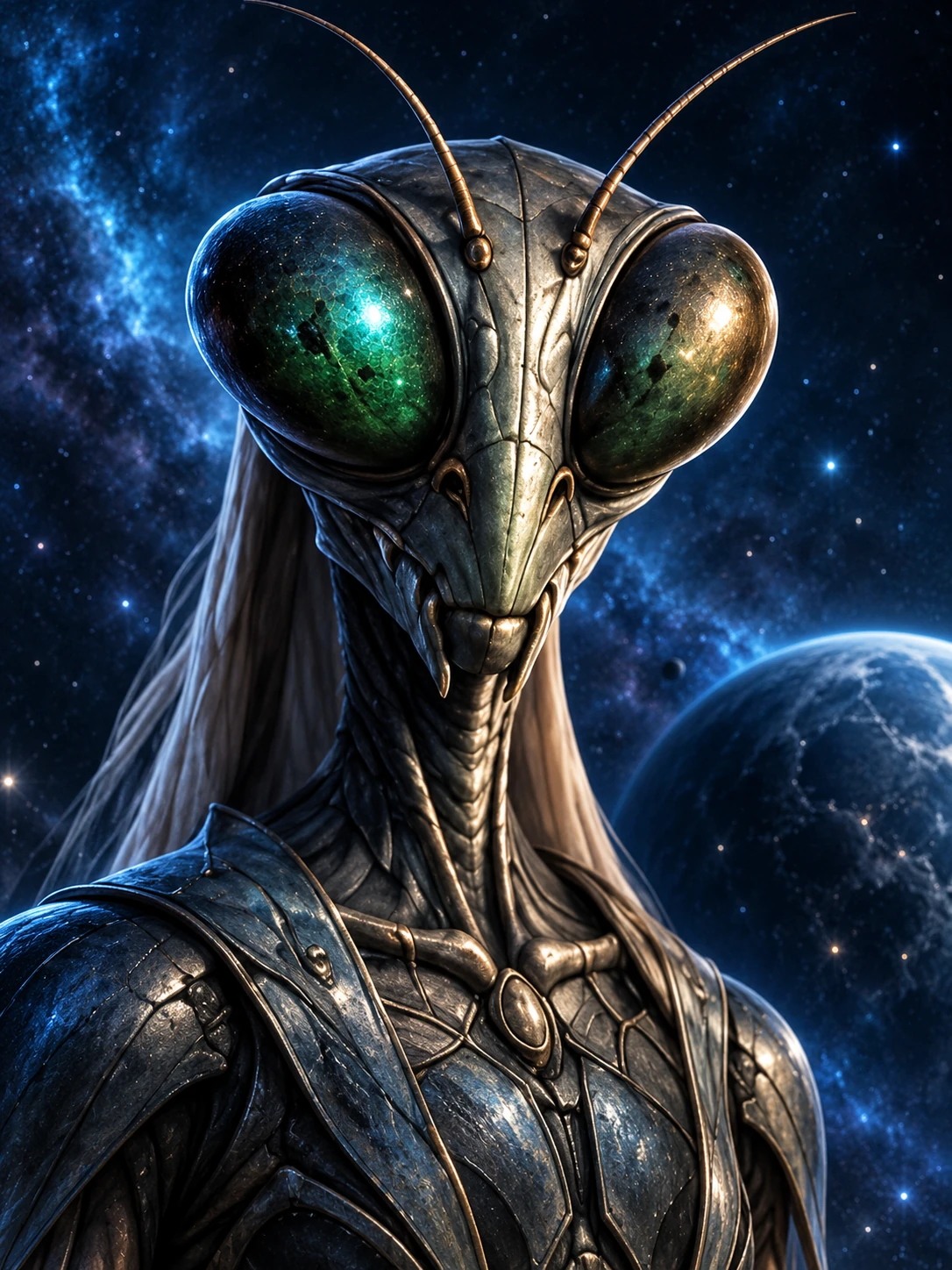
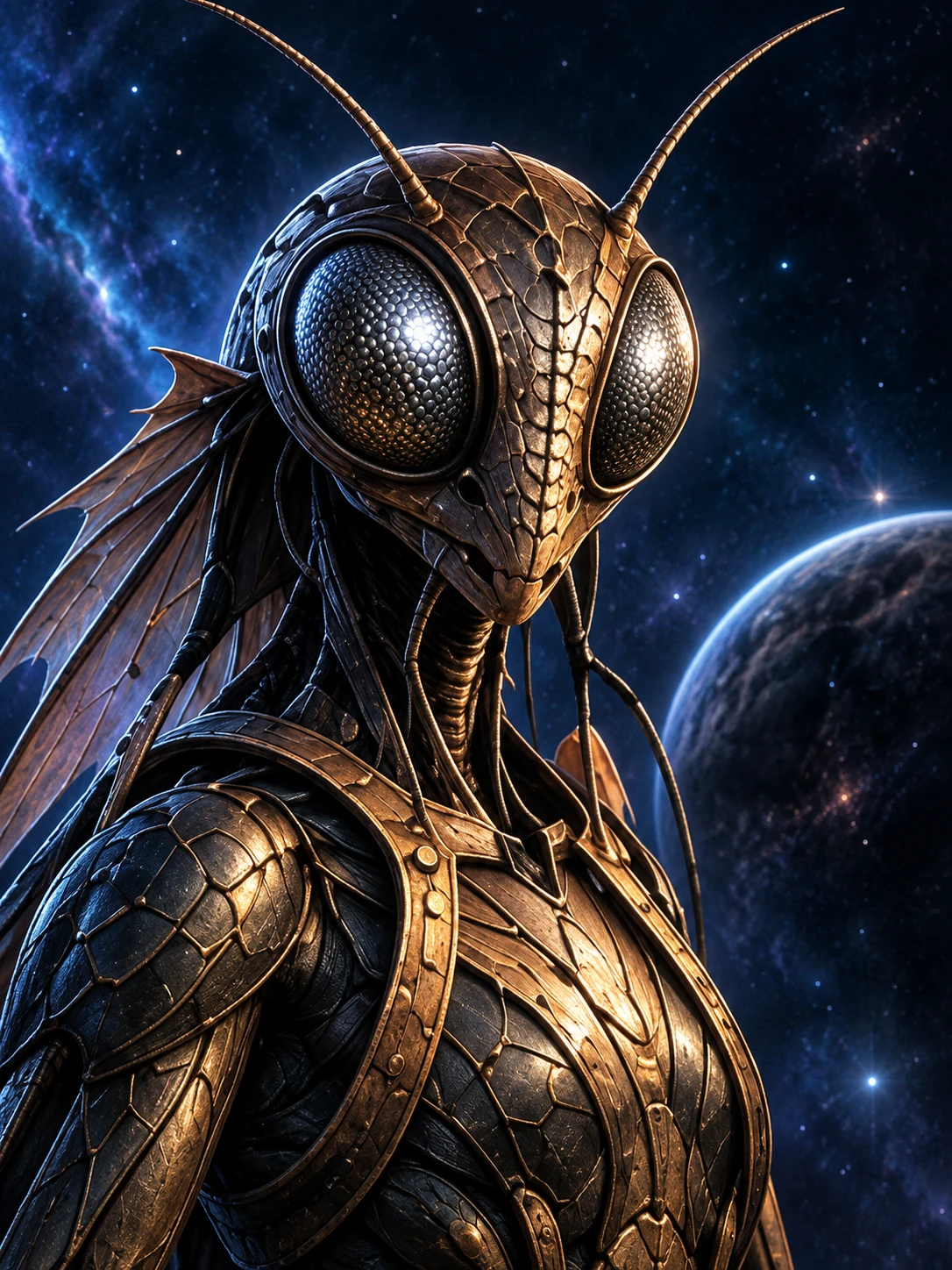
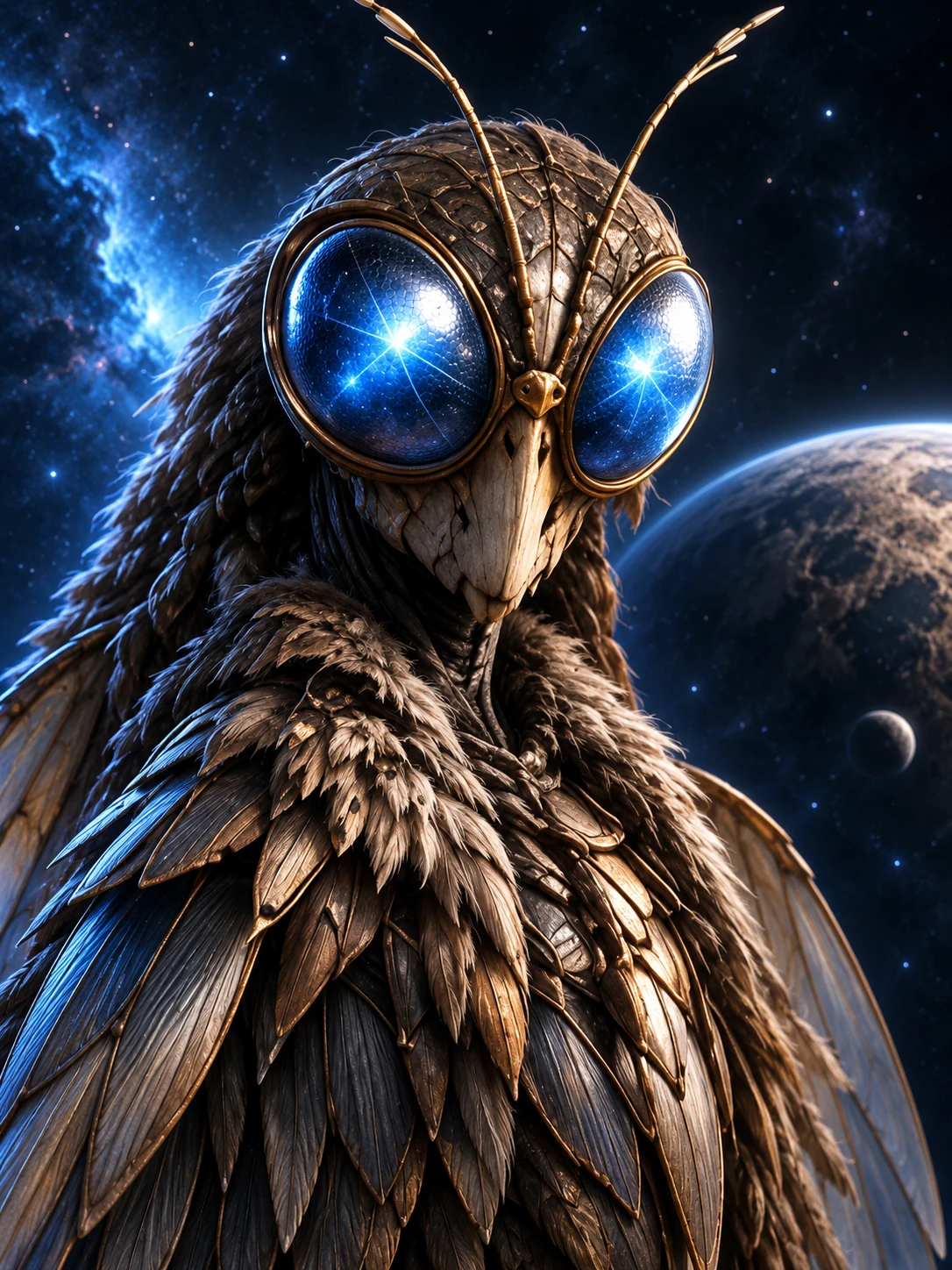
The family
Insect-like beings occupy a smaller but persistent corner of the reports. The most consistent is the Mantid, a tall praying-mantis figure that a minority of abduction accounts describe standing behind smaller Greys as a supervisor. The generic Insectoid, chitinous and hive-minded, owes more to science fiction from H. G. Wells onward.
The Mothman belongs here by shape rather than by origin: the winged, red-eyed figure reported around Point Pleasant, West Virginia, in 1966 and 1967 is a landmark of American folklore and is usually explained as a misidentified bird.
- Common traits
- Compound or oversized eyes, antennae
- Chitinous or plated bodies
- Described as analytical, collective or silent
- Mantid reported as an overseer figure
- Where it comes from
- Abduction literature from the 1980s; Point Pleasant sightings, 1966 to 1967; science fiction.
How to recognise it, and how the members differ
The Mantid is the reported member: seven to eight feet, a triangular head on a long neck, large dark eyes, thin folded forelimbs, and a calm authority over the Greys around it. The broader Insectoid is fiction's ant-like soldier or hive drone. The Mothmanoid, filed here for its wings, is a single winged figure with red eyes from one West Virginia sighting cluster.
Tell them apart by posture and setting: the Mantid stands still and watches inside a craft; the Insectoid swarms; the Mothman flies, outdoors, at night, and is never described as intelligent.
Where it came from
Insect aliens belong to science fiction from H. G. Wells's Selenites onward, through Heinlein's bugs and Giger's creature. The Mantid entered the abduction literature in the late 1980s, in accounts collected by David Jacobs and in Karla Turner's memoirs, usually as a senior figure glimpsed briefly.
The Mothman is separate in origin: a 1966 Point Pleasant sighting that John Keel's 1975 book turned into a legend, and a 2002 film turned into a tourist economy.
The sceptical reading
Mantid reports arrive almost entirely through hypnosis and through the same handful of researchers, which makes them hard to separate from expectation. The Mothman has a strong conventional candidate in the sandhill crane. The Insectoid proper is fiction and is labelled as such.
Case files involving this family
Side by side
XenoAtlas documents extraterrestrial concepts appearing in mythology, contactee literature, popular culture, speculative accounts, and related sources. Inclusion does not constitute scientific verification.