

InsectoidThe Hive
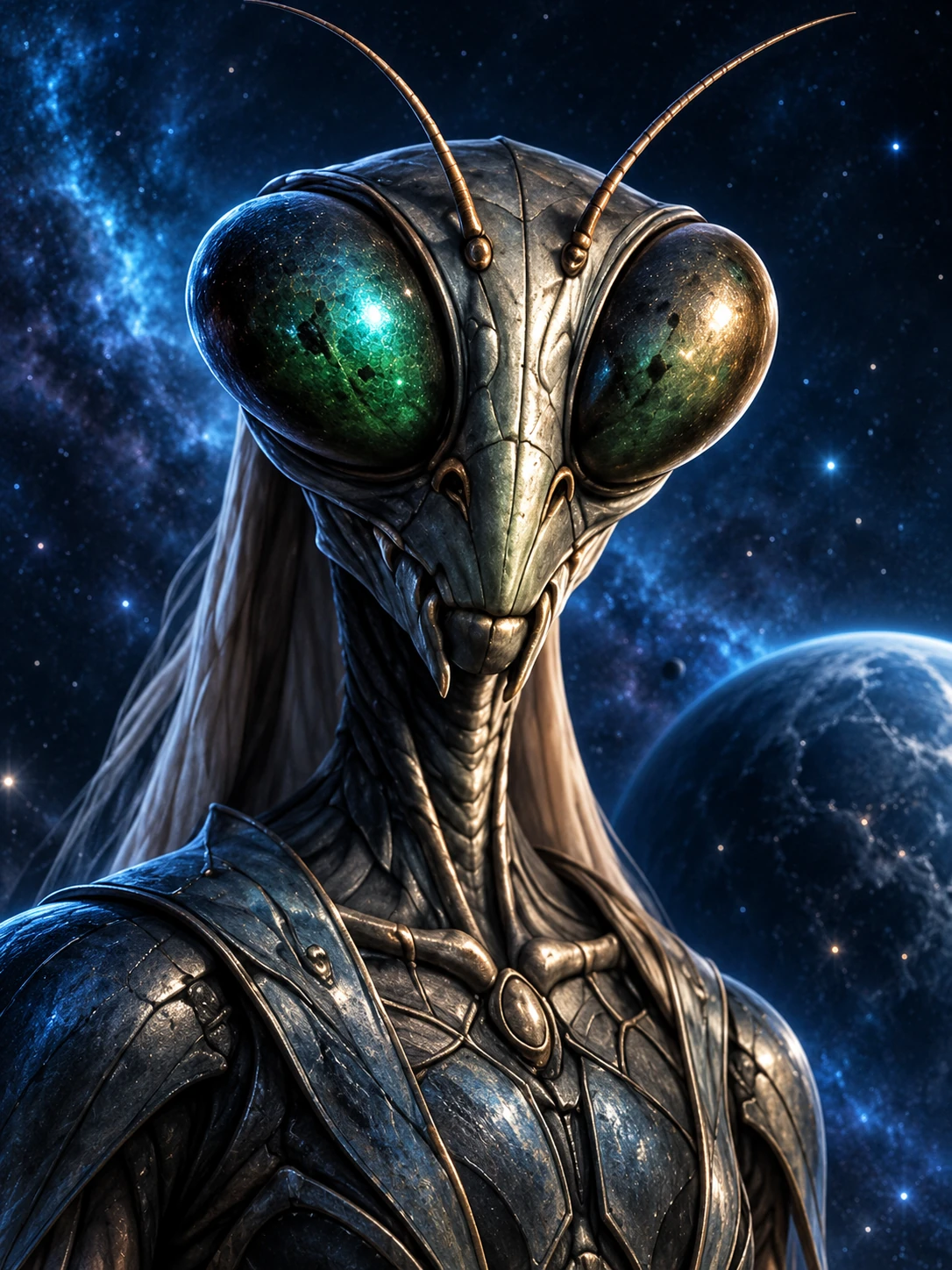
Insectoid or 'mantis' beings appear in a minority of abduction narratives, usually described as tall, praying-mantis-like figures who supervise smaller Greys. The type is also a long-running science-fiction trope, from H. G. Wells to modern film.
At a glance
- Home system
- Unknown
- Avg. height
- 5′11″ – 7′10″
- Appearance
- Mantis- or ant-like, exoskeletal, compound features
- Reported lifespan
- Unknown
- Social structure
- Described as hive or caste
- Technology
- Described as biological
- Primary traits
- Described as observant, authoritative, silent
- Relationship to Earth
- Appear in a minority of abduction reports
Physical profile
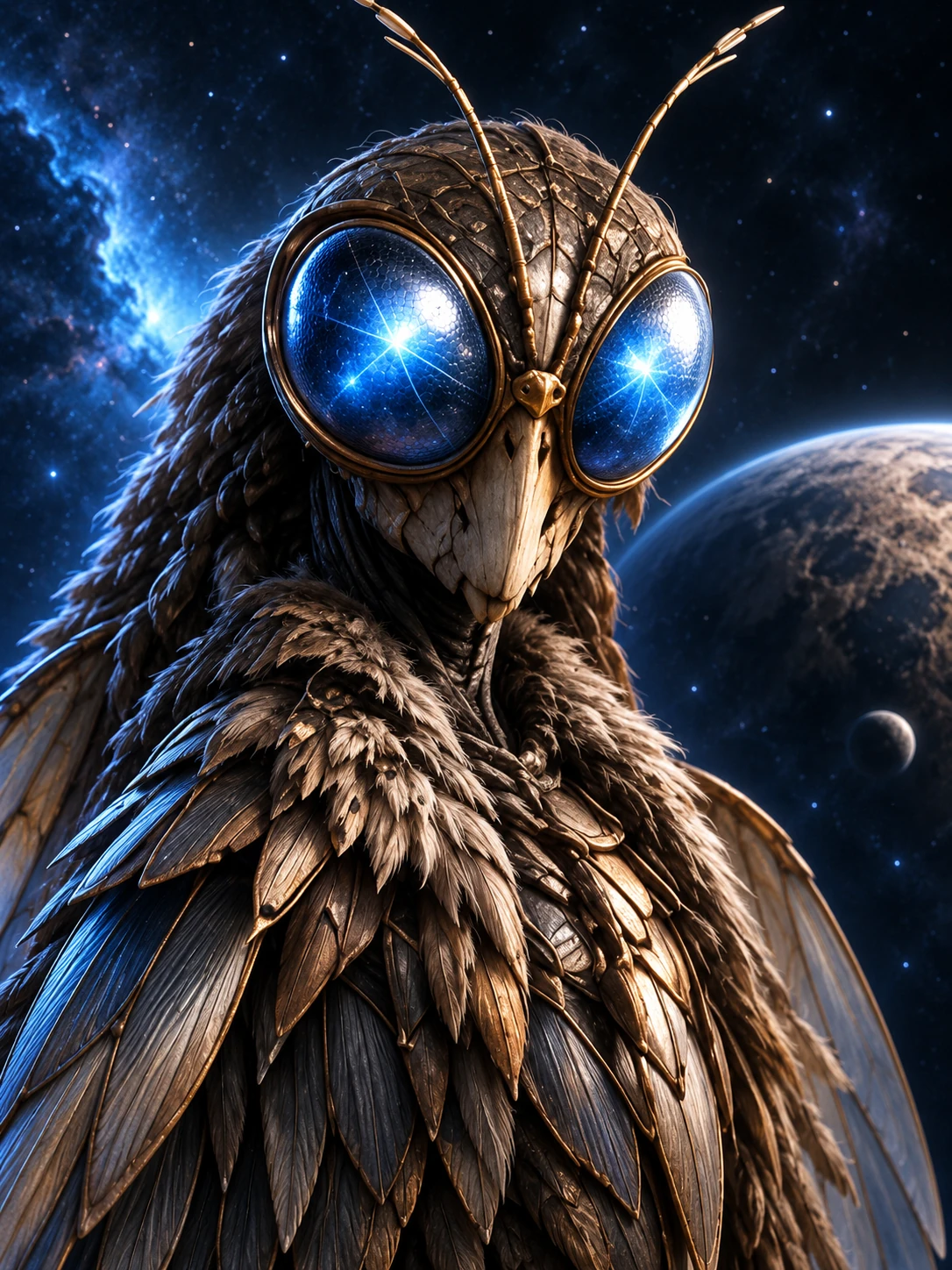
The Insectoid is a broad category rather than a single reported being. Descriptions include beings with chitinous plated bodies, compound or multifaceted eyes, antennae, mandibles or a small beaked mouth, and limbs jointed in ways that do not match human anatomy. Colouring runs from black and bronze to gold and green. Heights vary widely, from small ant-like workers to the towering Mantid, which XenoAtlas catalogues separately because it has its own witness tradition.
Reported origin
No homeworld is consistently reported. The Insectoid is defined by body plan, not by address, and the sources are a mixture of a small number of abduction accounts and a very large body of fiction.
Culture
Insectoid society is almost always described as a hive: castes, collective decision-making, a queen or central intelligence, and individuals without personal identity. That model comes from terrestrial social insects and from science fiction, where the hive has served as a metaphor for totalitarianism since at least the 1930s. In abduction accounts the impression is of a rigid, silent hierarchy in which the being's role is obvious from its size and bearing.
Technology
Insectoid technology is described as biological: grown rather than built, with craft and tools that appear organic. This is a fiction convention more than a witness report.
Craft
Craft are rarely described independently. Where insectoid beings appear in abduction accounts they are usually aboard vessels the witness associates with Greys.
Communication
Telepathic in most accounts, sometimes accompanied by clicking, chittering or a low hum. Witnesses often describe the communication as cold and instructional.
Earth encounters
Insect-like beings appear in a minority of abduction reports from the 1980s onward, usually as observers or supervisors rather than as the beings performing procedures. The type has a much longer life in fiction, from H. G. Wells's Selenites in The First Men in the Moon (1901) through Robert Heinlein's Starship Troopers (1959) to the Xenomorph of Alien (1979) and the Arachnids and Formics of later films and novels.
Lore & history
The insect is humanity's most alien familiar creature, and the Insectoid draws on a deep unease about cold intelligence, swarms and metamorphosis. XenoAtlas records the type as reported, on the strength of the abduction accounts, and fictional, on the strength of everything else.
Two literary sources deserve mention. Starship Troopers made the insect enemy a political allegory, and Orson Scott Card's Ender's Game (1985) made it a tragedy, with the 'buggers' revealed as a misunderstood hive mind. The abduction-era insectoid drew on both: cold and collective, but sometimes also described by witnesses as sorrowful or wise.
Source notes
- Abduction case literature (various) · case literature
- Robert A. Heinlein, Starship Troopers (1959) · fictionFind on Amazon
- Orson Scott Card, Ender's Game (1985) · fictionFind on Amazon
Book links go to Amazon. As an Amazon Associate, XenoAtlas earns from qualifying purchases at no extra cost to you.
XenoAtlas documents extraterrestrial concepts appearing in mythology, contactee literature, popular culture, speculative accounts, and related sources. Inclusion does not constitute scientific verification.
Side by side
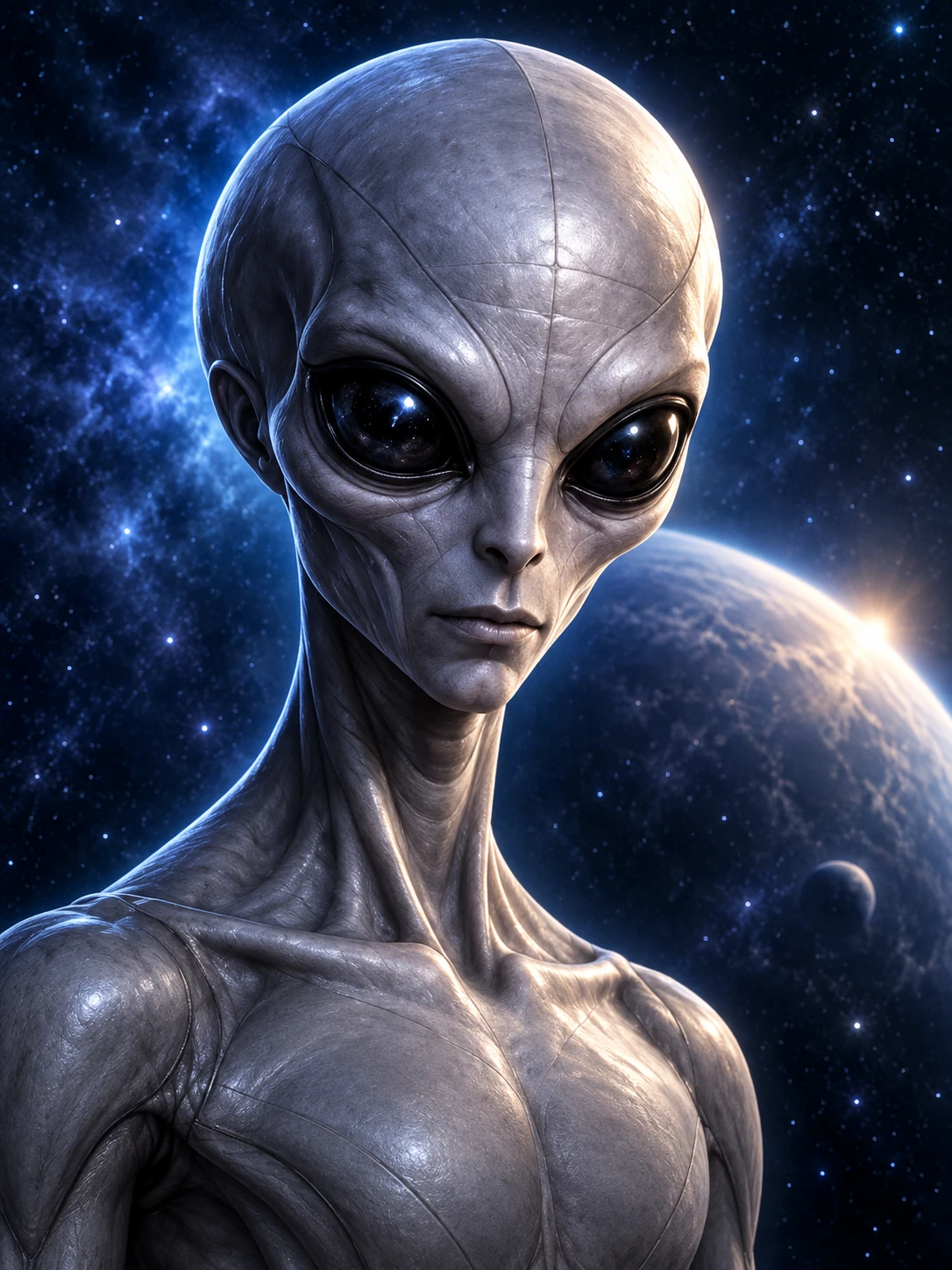
Related species
See every type in the Types of Aliens guide.