

MothmanoidThe Scouts
The Mothmanoid descends from the 'Mothman' sightings of Point Pleasant, West Virginia, in 1966–67: a winged humanoid with glowing red eyes. The case is a landmark of American folklore and has been linked by sceptics to misidentified sandhill cranes and owls.
At a glance
- Home system
- Various
- Avg. height
- 5′11″ – 7′3″
- Appearance
- Insect-like, winged, luminous eyes
- Reported lifespan
- 200 – 400 years (lore)
- Social structure
- Described as solitary scouts
- Technology
- Unknown
- Primary traits
- Observant, aerial, elusive
- Relationship to Earth
- Described as reconnaissance
Physical profile
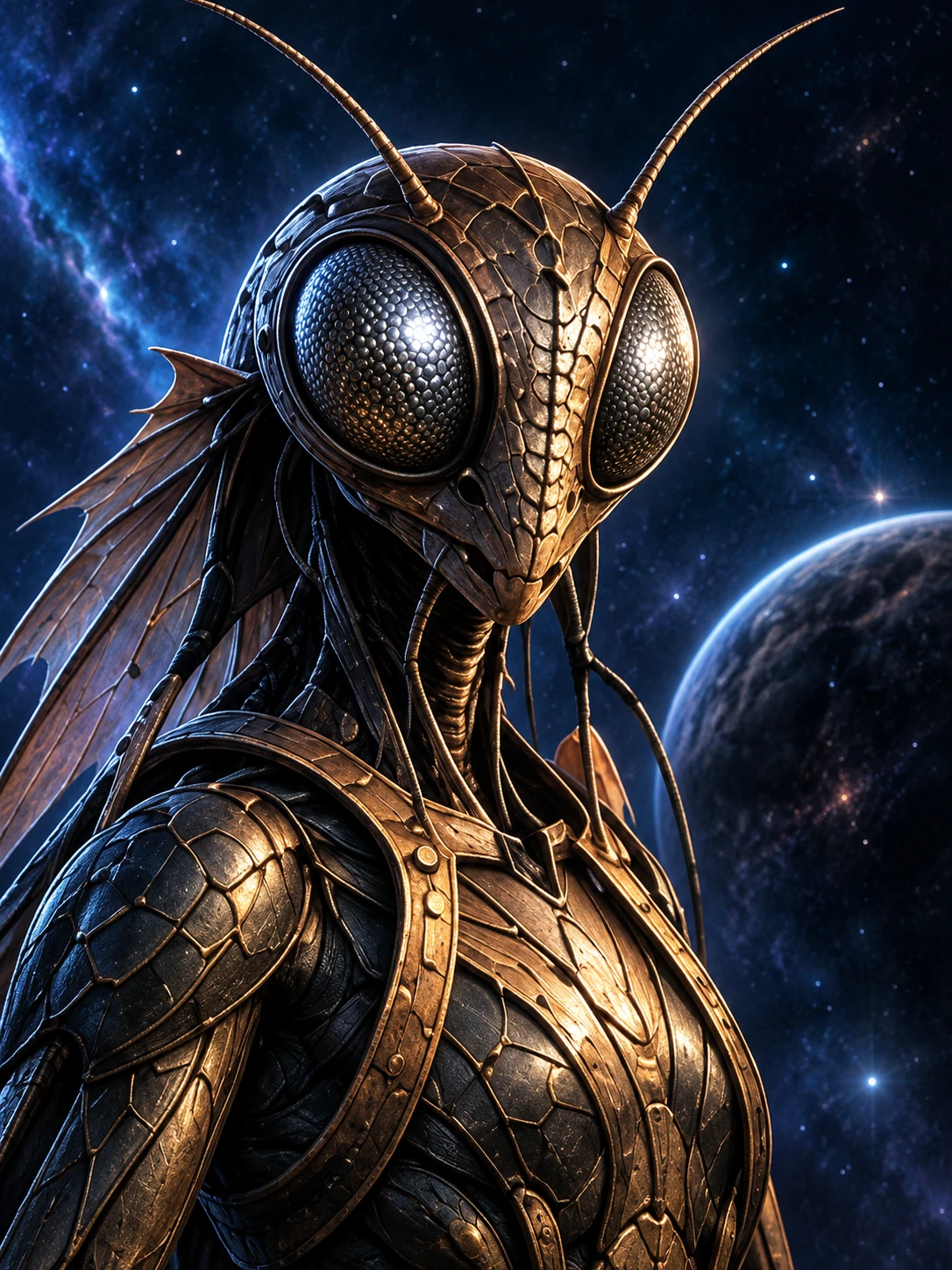
Witnesses at Point Pleasant described a figure six to seven feet tall, grey or brown, with large wings folded against its back and eyes that glowed red and were set, several said, in the chest or shoulders rather than in a distinct head. It flew without flapping and kept pace with cars at speed. XenoAtlas's Mothmanoid is that figure completed as a being: a moth-like head with large glowing eyes, antennae, feathery plumage and wings.
Reported origin
No origin is claimed. The Mothman was a local phenomenon, and only later writers connected it to visitors from elsewhere.
Culture
None described; the Mothman was encountered as an omen, not as a member of a society.
Technology
None.
Craft
None. The creature flew under its own power.
Communication
None reported, apart from a shriek described by some witnesses.
Earth encounters
Between November 1966 and December 1967 dozens of people in and around Point Pleasant, West Virginia, reported a winged figure near an abandoned munitions works. The sightings ended with the collapse of the Silver Bridge on 15 December 1967, which killed 46 people and which later writers cast as the event the creature had foretold. John Keel's 1975 book The Mothman Prophecies made the case famous, and a 2002 film followed. Sceptics have pointed to sandhill cranes and barred owls, both large, both with reflective eyes, as the likely stimulus.
The first widely reported sighting came on 15 November 1966, when two young couples driving near the old TNT area reported a winged figure that followed their car toward town. Local reporting gave it the name Mothman after the Batman villain then on television. Over the following year, sightings accumulated alongside reports of strange lights, men in black and animal deaths, all of which Keel wove together in his book. The Silver Bridge collapse, caused by a single corroded eyebar, ended the wave.
Lore & history
The Mothman is American folklore of the first rank, with a statue and an annual festival in Point Pleasant. XenoAtlas lists it as folklore and reported, and places it among the insectoids by shape alone.
Encounters on record
Source notes
- Mothman — sightings and folklore · encyclopedic summary
- John A. Keel, The Mothman Prophecies (1975) · investigationFind on Amazon
Book links go to Amazon. As an Amazon Associate, XenoAtlas earns from qualifying purchases at no extra cost to you.
XenoAtlas documents extraterrestrial concepts appearing in mythology, contactee literature, popular culture, speculative accounts, and related sources. Inclusion does not constitute scientific verification.
Side by side
Related species
See every type in the Types of Aliens guide.