

Avian types
Bird-headed beings from Horus to the Blue Avians
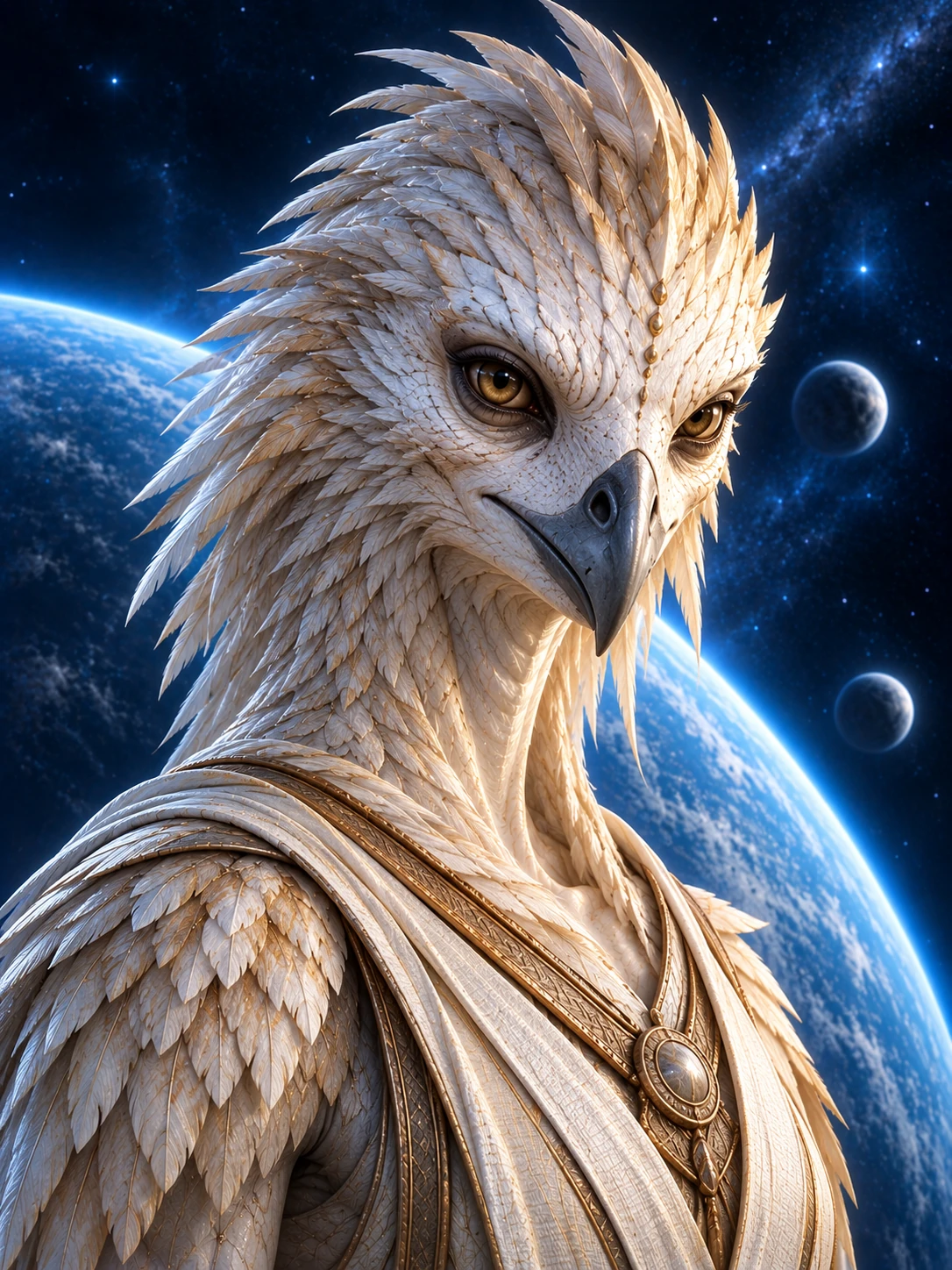
The family
Bird-headed gods run through Egyptian, Mesoamerican and Hindu tradition, and the form returned in 2015 contactee media as the 'Blue Avians'. The Avian is catalogued as a recurring mythic archetype that modern lore has redressed as a visitor.
- Common traits
- Beaked or raptor-like face, feathers
- Framed as messengers and record keepers
- No consistent home system
- Where it comes from
- Comparative mythology; 2015 contactee media.
How to recognise it, and how the members differ
A bird's head, sometimes wings, on a human frame; feathers or a crest; a bearing that art renders as regal. Modern channelled versions, the 'Blue Avians', add blue plumage and a message of ascension. The family has one member because the sources describe one recurring shape rather than distinct populations.
Where it came from
Bird-headed gods are everywhere in ancient art: Horus and Thoth in Egypt, the Anzu bird in Mesopotamia, garudas in South Asia, the feathered serpent in Mesoamerica. Ancient-astronaut writers from von Däniken onward read these as visitors in helmets or as literal hybrids.
The channelled Blue Avians of the 2010s are the latest form, arriving through online contactee communities rather than through any sighting.
The sceptical reading
Archaeologists read bird-headed deities as symbolic composites, common to cultures that watched birds and needed images for sight, sky and speed. There is no sighting record for an avian being outside myth and channelling. The family is folklore and is labelled folklore.
Side by side
XenoAtlas documents extraterrestrial concepts appearing in mythology, contactee literature, popular culture, speculative accounts, and related sources. Inclusion does not constitute scientific verification.