

Anunnaki vs Nordic
No. The Anunnaki are ancient-astronaut gods from Sitchin's reading of Sumerian texts; Nordics are the contactee visitors of the 1950s. Some writers link them, but the traditions are separate.
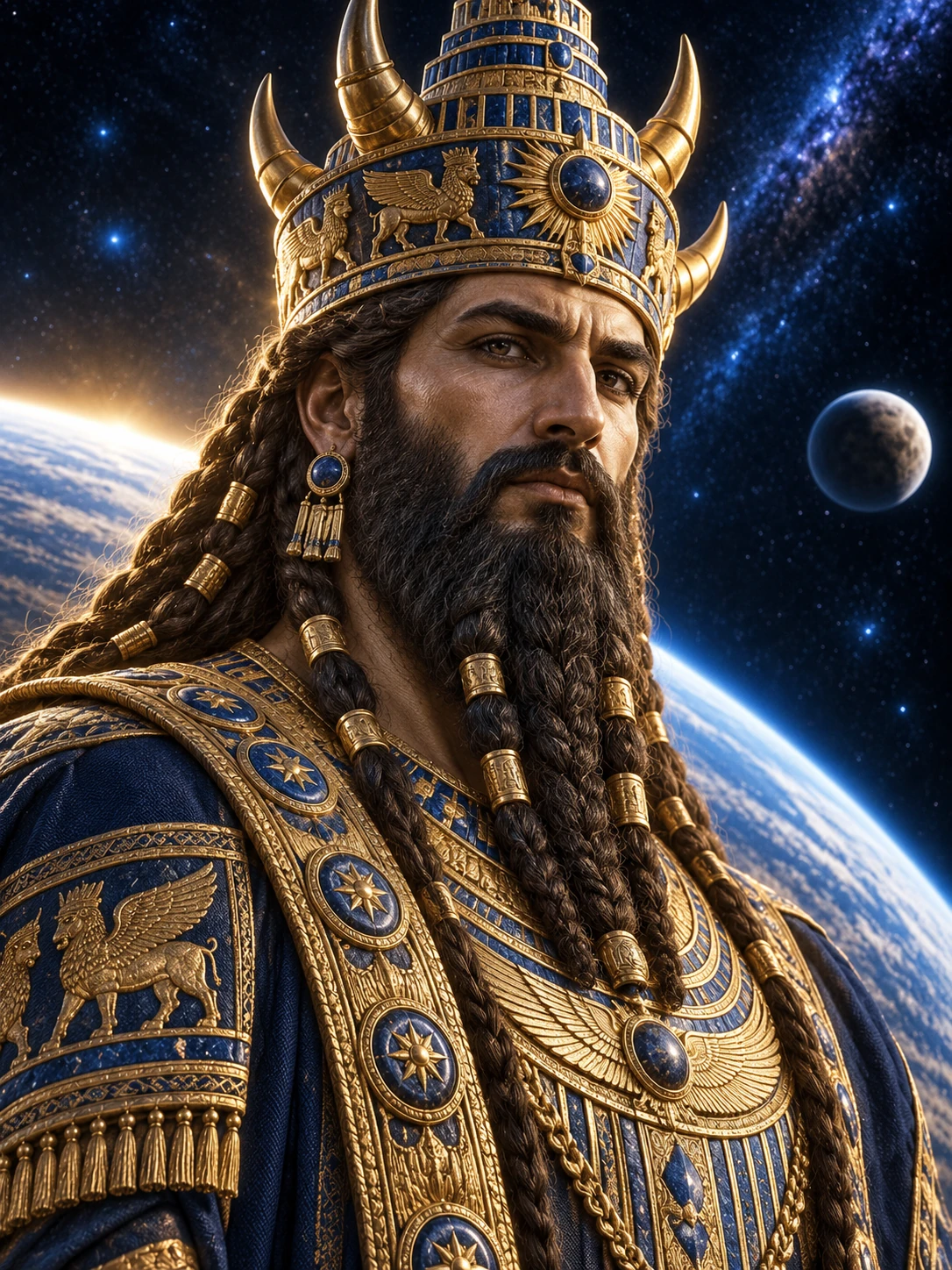

The difference
The Anunnaki are the gods of the distant past; the Nordics are the visitors of the recent one. Both are tall and human-like, and some writers connect them, but the Anunnaki are described as rulers who made humans to serve, while Nordics are described as observers who refuse to interfere.
One comes from a rereading of ancient texts, the other from twentieth-century desert encounters.
At a glance
| Field | Anunnaki | Nordic |
|---|---|---|
| Classification | Folklore | Contactee lore |
| Evidence | Folklore, Speculative | Contactee lore, Speculative |
| Claimed origin | Nibiru (lore) | Lyra |
| Homeworld | Nibiru | Lyra |
| Reported height | 8′0″ – 10′0″ (lore) | 5′11″ – 7′10″ |
| Appearance | Giant, human-like, bearded, in Mesopotamian regalia | Fair skin, light hair, blue or light eyes |
| Lifespan | Described as hundreds of thousands of years | 800 – 1,200 years (reported) |
| Social structure | Described as a divine council | Collective / non-hierarchical |
| Technology | Described as genetic engineering and flight | Reported as highly advanced |
| Traits | Commanding, ancient, patriarchal | Reported as calm, observant, human-like |
| Relationship to Earth | Ancient-astronaut lore casts them as humanity's creators | Described in contactee traditions as observers or guides |
How to tell them apart
- Anunnaki is reported as the taller of the two (8′0″ – 10′0″ (lore), against 5′11″ – 7′10″ for Nordic).
- Both belong to the Human-like types family in the Atlas.
- Reported height: Anunnaki 8′0″ – 10′0″ (lore); Nordic 5′11″ – 7′10″.
- Claimed origin: Anunnaki Nibiru (lore); Nordic Lyra.
- Case files in the Atlas: Anunnaki 0; Nordic 2.
In their own dossiers
In the Mesopotamian sources the Anunnaki have no fixed appearance: they are gods, shown in art as human figures of great size wearing horned crowns, long beards and layered robes, sometimes with wings. The ancient-astronaut version keeps the giant scale, describing beings eight to ten feet tall, and adds the vocabulary of visitors: flying craft, protective suits, advanced tools. XenoAtlas renders the type as the art of Assyria and Babylon presents it, monumental and bearded, because that is the only description with a source.
Accounts of the Nordic type are remarkably consistent for a body of literature that spans seventy years and several languages. Witnesses describe a being between roughly six and eight feet tall, athletic rather than heavy, with proportions that read as human but slightly idealised: a longer neck, a straighter spine, hands with fine, long fingers. Skin is pale to the point of luminosity, hair is platinum, white-gold or silver and usually worn long on both sexes, and eyes are most often described as pale blue, grey or violet, larger than a human's but not dramatically so.
More comparisons
XenoAtlas documents extraterrestrial concepts appearing in mythology, contactee literature, popular culture, speculative accounts, and related sources. Inclusion does not constitute scientific verification.