

Anunnaki vs Sirian
No. The Anunnaki come from Sumerian myth via Sitchin; Sirians from Dogon and Egyptian star lore via Temple. Different myths, different authors.
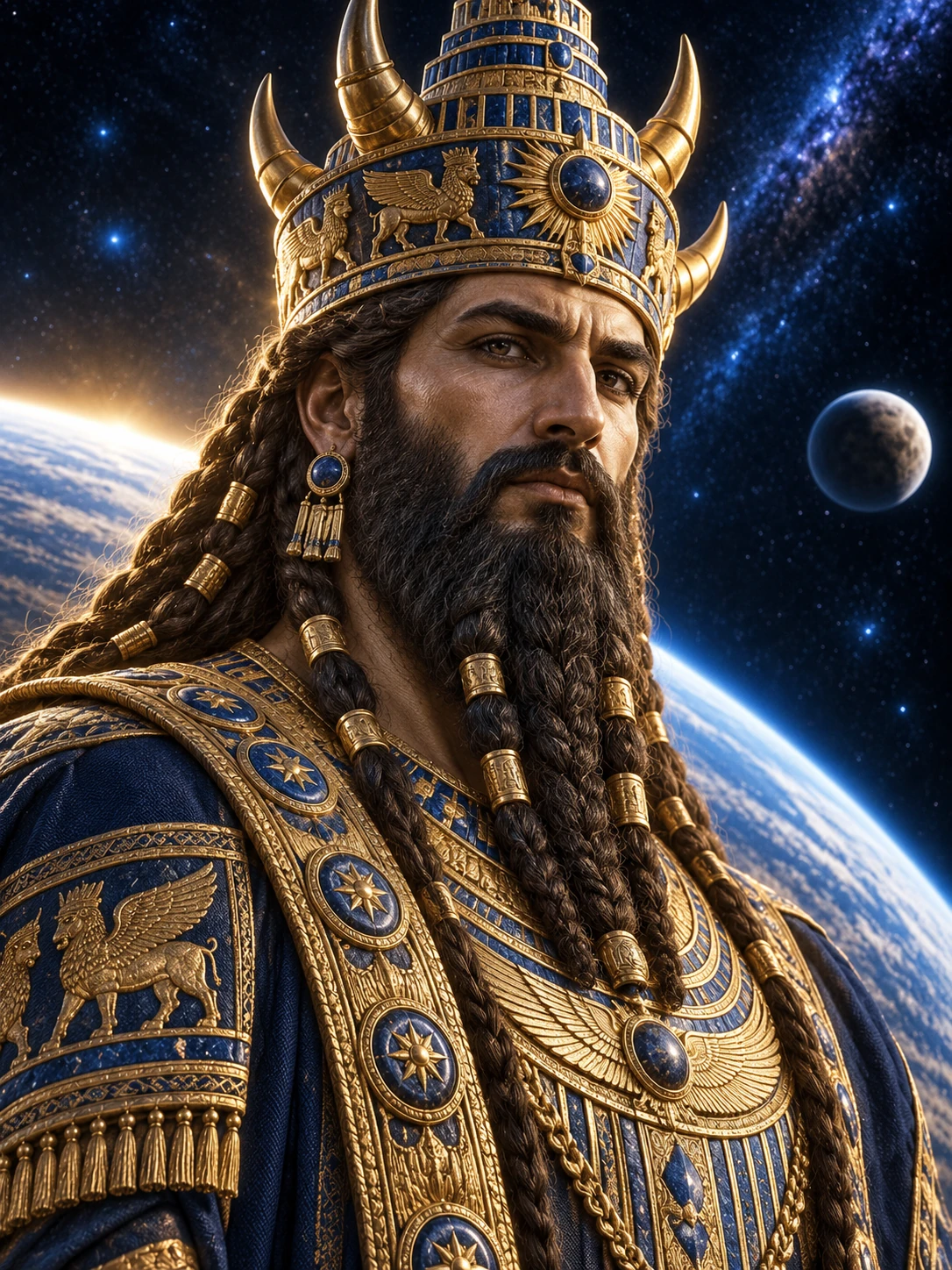 Race 36AnunnakiThe Sky LordsFolkloreSpeculative
 Race 06SirianThe Star ArchitectsFolkloreContactee lore
The difference
Both are ancient-astronaut types read out of mythology, but from different myths. The Anunnaki are the Mesopotamian gods as reinterpreted by Zecharia Sitchin; the Sirians are drawn from the Dogon Nommo and Egyptian Sirius lore by Robert Temple.
The Anunnaki are described as giant humans who engineered us; Sirians as amphibious or human-like teachers who visited us.
At a glance
| Field | Anunnaki | Sirian |
|---|---|---|
| Classification | Folklore | Folklore |
| Evidence | Folklore, Speculative | Folklore, Contactee lore |
| Claimed origin | Nibiru (lore) | Sirius (Canis Major) |
| Homeworld | Nibiru | Sirius B region |
| Reported height | 8′0″ – 10′0″ (lore) | 5′11″ – 7′7″ |
| Appearance | Giant, human-like, bearded, in Mesopotamian regalia | Pale blue-tinged skin, tall, elongated features |
| Lifespan | Described as hundreds of thousands of years | Unknown |
| Social structure | Described as a divine council | Described as scholarly guilds |
| Technology | Described as genetic engineering and flight | Described as architectural and astronomical |
| Traits | Commanding, ancient, patriarchal | Described as intellectual, precise, builders |
| Relationship to Earth | Ancient-astronaut lore casts them as humanity's creators | Folklore links them to ancient civilisations |
How to tell them apart
- Anunnaki is reported as the taller of the two (8′0″ – 10′0″ (lore), against 5′11″ – 7′7″ for Sirian).
- Both belong to the Human-like types family in the Atlas.
- Reported height: Anunnaki 8′0″ – 10′0″ (lore); Sirian 5′11″ – 7′7″.
- Claimed origin: Anunnaki Nibiru (lore); Sirian Sirius (Canis Major).
- Neither appears in any of the Atlas case files; both are known through literature rather than sightings.
In their own dossiers
In the Mesopotamian sources the Anunnaki have no fixed appearance: they are gods, shown in art as human figures of great size wearing horned crowns, long beards and layered robes, sometimes with wings. The ancient-astronaut version keeps the giant scale, describing beings eight to ten feet tall, and adds the vocabulary of visitors: flying craft, protective suits, advanced tools. XenoAtlas renders the type as the art of Assyria and Babylon presents it, monumental and bearded, because that is the only description with a source.
The Sirian of modern lore is tall and elongated, with cool blue-white or pale skin, white hair and refined features that read as a colder, more austere relative of the Nordic. Some sources describe a luminous quality to the skin and unusually long fingers. The being is almost always portrayed as intellectual rather than warm: a scholar and builder rather than a guide.
More comparisons
XenoAtlas documents extraterrestrial concepts appearing in mythology, contactee literature, popular culture, speculative accounts, and related sources. Inclusion does not constitute scientific verification.