

Star PeopleThe Ancestors
Star People, or Star Beings, appear across Indigenous North American traditions, including Lakota, Hopi, Cree and Zuni accounts, as ancestors who came from the stars, teachers who return, or relatives who will one day take people home. Contemporary Indigenous writers have recorded present-day encounter stories in the same framework. XenoAtlas presents the tradition with respect and without claiming to speak for it.
At a glance
- Home system
- The stars, unnamed
- Avg. height
- Human-like
- Appearance
- Described as human-like beings of light, or as visitors indistinguishable from people
- Reported lifespan
- Unknown
- Social structure
- Described as kin and teachers
- Technology
- Described in terms of travel between worlds
- Primary traits
- Wise, protective, ancestral
- Relationship to Earth
- Ancestors and visitors in many Indigenous North American traditions
Physical profile
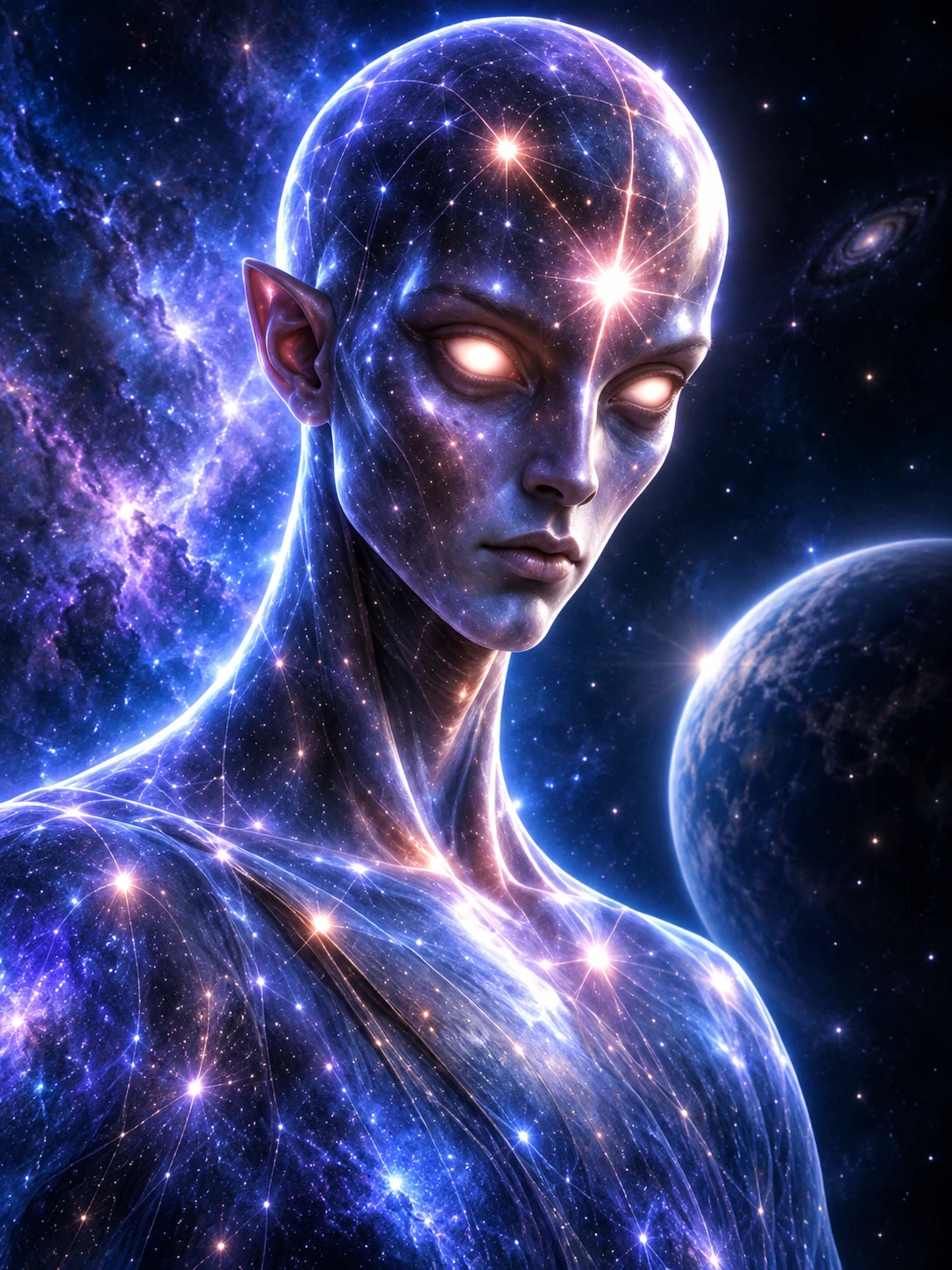
Star People are not described as a single physical type, and XenoAtlas does not invent one. In many accounts they appear as ordinary-looking people who reveal themselves as visitors; in others as beings of light; in Hopi tradition the kachinas, spirit beings some connect to the star traditions, are represented in dance by masked figures. The archive's rendering shows a human-like figure lit from within, deliberately unspecific.
Reported origin
The traditions vary by nation. Lakota stories tell of the Star Nation as relatives; Hopi tradition includes ancestors who came from the stars and the expectation of their return; Cree, Zuni, Ojibwe and other peoples have their own accounts. These are living traditions, held by communities, and the archive presents them as such rather than as evidence in a ufological argument.
Culture
Kinship. The consistent theme across traditions is that the Star People are not strangers: they are ancestors, relatives or teachers, and the relationship is reciprocal.
Technology
Described, where it is described, in terms of travel between worlds and of gifts of knowledge, without machinery.
Craft
Lights in the sky, in modern accounts; in older tradition, no craft is needed.
Communication
Speech, dream and vision.
Earth encounters
Ardy Sixkiller Clarke, a Cherokee and Choctaw academic, collected contemporary accounts from Indigenous people across North America in Encounters with Star People (2012) and later books, presenting them in the tellers' own words. Her subjects describe sightings, meetings and warnings, usually interpreted within their own traditions rather than through the abduction narrative of the wider culture.
Lore & history
It is common for ancient-astronaut writing to appropriate Indigenous traditions as 'evidence'. XenoAtlas does not. The Star People are here because they are a major and living tradition of visitors from the sky, and the entry is written to point readers toward Indigenous sources rather than to interpret them.
Source notes
- Ardy Sixkiller Clarke, Encounters with Star People (2012) · Indigenous oral-history collectionFind on Amazon
- Ardy Sixkiller Clarke, Sky People (2015) · Indigenous oral-history collectionFind on Amazon
Book links go to Amazon. As an Amazon Associate, XenoAtlas earns from qualifying purchases at no extra cost to you.
XenoAtlas documents extraterrestrial concepts appearing in mythology, contactee literature, popular culture, speculative accounts, and related sources. Inclusion does not constitute scientific verification.
Side by side
Related species

See every type in the Types of Aliens guide.