

CrystallineThe Resonants
Silicon-based life is a long-standing thought experiment in astrobiology, and crystalline beings are a staple of speculative fiction. The Crystalline is the Atlas's rendering of that idea: a slow, resonant, faceted people from a silicate world.
At a glance
- Home system
- Silicate worlds
- Avg. height
- 5′11″ – 8′2″
- Appearance
- Faceted crystalline body, violet-white
- Reported lifespan
- 500 – 1,000 years (lore)
- Social structure
- Described as resonant collectives
- Technology
- Described as vibrational
- Primary traits
- Energetic, telepathic, resonant
- Relationship to Earth
- Described as vibrational allies
Physical profile
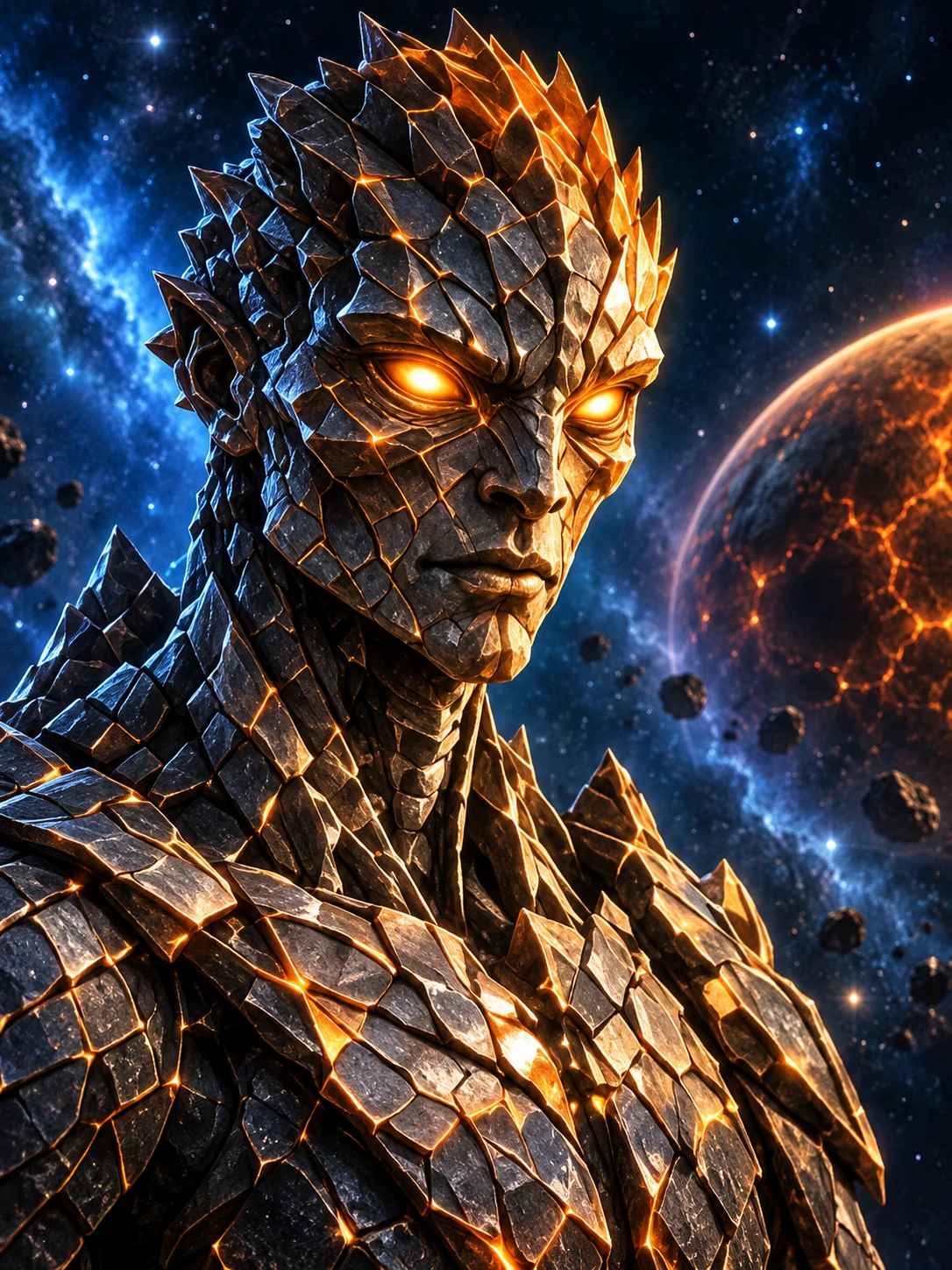
The Crystalline is a humanoid lattice of translucent violet or blue crystal with light moving through it, faceted rather than smooth, with glowing eyes and a crown of crystal growth. It is portrayed as slow, resonant and ancient, and as hard to injure.
Reported origin
Silicate worlds, unspecified. The idea rests on the astrobiological question of whether silicon could substitute for carbon as the basis of life.
Culture
Resonant collectives that communicate through vibration and value harmony over action.
Technology
Vibrational and crystalline, in the language of the New Age literature that also uses crystals for healing.
Craft
Not described.
Communication
Vibration and tone.
Earth encounters
There are no cases. Silicon-based life was proposed as a possibility in the late nineteenth century and has been examined seriously since; the consensus is that silicon's chemistry makes it a poor substitute for carbon in any Earth-like environment. Fiction has embraced the idea regardless, from the Horta of Star Trek to countless crystal beings in games.
Lore & history
XenoAtlas lists the Crystalline as speculative and fictional.
Crystal healing, a New Age practice with no clinical support, and silicon life, a scientific hypothesis with no examples, meet in this archetype.
Source notes
- Silicon-based life (astrobiology); speculative fiction · speculative
- Michael Crichton, The Andromeda Strain (1969) · fictionFind on Amazon
Book links go to Amazon. As an Amazon Associate, XenoAtlas earns from qualifying purchases at no extra cost to you.
XenoAtlas documents extraterrestrial concepts appearing in mythology, contactee literature, popular culture, speculative accounts, and related sources. Inclusion does not constitute scientific verification.
Side by side
Related species
See every type in the Types of Aliens guide.